


How much is a Denver traumatic brain injury (TBI) case worth?Colorado’s damages cap (C.R.S. § 13-21-102.5) limits non-economic damages like pain and suffering, but your economic losses — medical bills, long-term care, and lost pay — have no cap. So a traumatic brain injury (TBI) personal injury claim, covering a brain injury from a blow or jolt to the head, is worth those full costs. An experienced Denver personal injury attorney can evaluate your claim, explain how Colorado law may affect your compensation, and fight to recover the full damages you deserve. |
A traumatic brain injury (TBI), a brain injury from a blow or jolt to the head, doesn’t come with a warning. Not knowing how far you will recover — or watching the person you love change before your eyes — is one of the most frightening experiences a family can face. You didn’t choose this, and you shouldn’t have to fight it alone. A Denver traumatic brain injury lawyer can carry the legal fight while your family focuses on healing.
- Over two decades in Denver courtrooms: Levine Law founder Jordan S. Levine and our injury attorneys have represented hurt Coloradans for more than 20 years. Get to know our team and who would handle your case.
- A history of serious recoveries: We have won multi-million-dollar verdicts and settlements for injured clients, and our client reviews speak to the care behind them.
- Any cause of a brain injury: Many TBIs start with a car accident, but a fall or a defective product can cause one too — all on contingency, so you pay no fee unless we win.
- A free case evaluation: Contact our Denver office, and review the awards and recognition our attorneys have earned.
How long you have to file a claim depends on how you were injured. For car accidents, you generally have three years to take action under C.R.S. § 13-80-101. If your injury was caused by a fall or a defective product, you usually have two years under C.R.S. § 13-80-102.
What should you do immediately after a brain injury in Denver?
Get emergency care first. Then document everything you can. A suspected brain injury is a medical emergency. Denver Health Medical Center runs the region’s 911 system and the only Level I trauma center in the City of Denver. Its Ernest E. Moore Shock Trauma Center is where many severe TBIs are stabilized.
The first hours matter for your health and for any future claim. To protect both:
- Get checked — even for a “minor” bump on the head. Shock can hide concussion symptoms. Prompt records from Denver Health or UCHealth University of Colorado Hospital on the Anschutz campus in Aurora tie the injury to the event.
- Report the incident. If a vehicle was involved, C.R.S. § 42-4-1606 requires an immediate report of any crash that causes injury. Denver Police or the Colorado State Patrol will complete a Colorado Traffic Crash Report (DR 3447). For a fall, ask the property owner or manager to make a written incident report and get a copy.
- Preserve the scene. Photograph the spot — the intersection or mile marker, the unlit stairwell, the icy walkway, the missing handrail. Denver’s freeze-thaw weather often becomes a disputed fact later.
- Watch for delayed symptoms and write them down. Headaches, confusion, memory gaps, mood changes, light sensitivity, and poor sleep can show up days later. A dated symptom log becomes strong proof in an “invisible injury” case.

What actually happens after a brain injury in Denver?
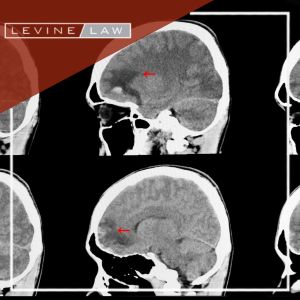
The process moves slower than most families expect. Brain-injury claims are also hard to prove. Records from a Denver Police Department crash report or a busy trauma intake at Denver Health can take days to arrive. And a mild TBI often does not show on a standard CT scan, which gives insurers room to argue nothing serious happened.
That gap is the main challenge. A concussion or mild TBI can wreck your ability to work, focus, and function — even when a scan reads as “normal”. Proving the injury often takes advanced scans and neuropsychological testing (tests that measure memory, thinking, and focus) against how you were before. Meanwhile, the at-fault party’s insurer often calls within days. Sometimes they ask for a recorded statement before anyone knows how bad the injury is. It is fair to give only the basic facts and to decline a recorded statement until you have spoken with an attorney.
What are the most common causes of traumatic brain injuries in Denver?
Most Denver brain injuries start with a sudden blow or jolt to the head. Crashes on high-speed roads and falls on Colorado’s ice are among the top local causes. The most common sources:
- Motor vehicle crashes on roads like I-25, I-70, and the I-25/I-70 interchange known as “the Mousetrap”. High speeds and sudden stops drive violent head impacts. In 2024, 153 car occupants and 206 pickup and SUV occupants died on Colorado roads, and many more survived with serious brain injuries.
- Falls, the leading cause of TBI nationwide per the CDC — from ladders, stairwells, scaffolding, and icy sidewalks along roads like Colfax Avenue and Colorado Boulevard.
- Motorcycle and bicycle crashes, where riders are exposed and even a helmeted rider can suffer a serious brain injury.
- Sports and recreation, including skiing, football, and cycling — a real risk in an active state like Colorado.
- Assaults and acts of violence, which can cause a penetrating or closed head injury.
According to the Brain Injury Alliance of Colorado, more than 500,000 people in Colorado are living with a brain injury and a related disability, and roughly 400,000 youth are treated for a brain injury in hospital emergency departments nationwide each year. Brain injury also carries a documented mental-health toll: about half of brain-injury survivors go on to receive a mental health diagnosis — a real, compensable consequence that a life-care plan should account for, not just the physical injury. Nationally, the CDC recorded more than 69,000 TBI-related deaths in the United States in a recent year.


What are the symptoms of a traumatic brain injury?
Symptoms can show up immediately or take days to surface, which is exactly why a dated symptom log matters for both your health and your claim. The CDC and Mayo Clinic group TBI symptoms into three categories:
- Physical symptoms: headaches, dizziness, blurred or double vision, sensitivity to light or noise, nausea, fatigue, and trouble with balance or coordination.
- Cognitive symptoms: memory problems, trouble concentrating, slowed thinking, confusion, and difficulty finding words.
- Emotional and behavioral symptoms: irritability, anxiety, depression, mood swings, and changes in sleep patterns.
Symptoms that worsen — repeated vomiting, seizures, one pupil larger than the other, slurred speech, or increasing confusion — are medical emergencies and warrant an immediate return to the ER, not a wait-and-see approach.
What are the types and severity levels of traumatic brain injury?
Brain injuries range from mild concussions to severe, life-changing damage. Doctors group them into closed injuries (no break in the skull) and penetrating injuries (an object breaks the skull). Severity drives both the medical timeline and the value of a claim.
- Concussion (mild TBI): the most common form, from a sudden blow or jolt. It is often called “mild”, yet repeated or severe concussions can cause lasting effects on thinking and mood.
- Contusion: a bruise on the brain from direct impact, sometimes with bleeding.
- Coup-contrecoup injury: damage at the point of impact and on the opposite side, as the brain slams inside the skull. It is common in high-speed crashes.
- Diffuse axonal injury (DAI): widespread tearing of nerve fibers as the brain rotates inside the skull. This severe injury is often tied to coma.
- Penetrating injury: an open head wound where an object enters the skull and brain.
The Mayo Clinic notes that TBI symptoms — memory problems, trouble focusing, mood changes, headaches, dizziness, and sensory issues — may last days, months, or a lifetime. Outcomes vary widely from person to person.
Who is liable for a traumatic brain injury in Denver?
Liability rests on negligence. A person or business that fails to exercise reasonable care is responsible for the harm they cause. That can be a distracted driver, a property owner who ignores a hazard, or the maker of a defective product. Depending on how the injury happened, more than one party may share the blame.
- Negligent drivers — the most common at-fault party in crash-related TBIs.
- Employers — under vicarious liability (when an employer is responsible for its worker), a company can be on the hook when a commercial or delivery driver crashes on the job, or when an unsafe worksite causes a fall.
- Property owners and managers — responsible under Colorado’s Premises Liability Act (C.R.S. § 13-21-115)when a hazard like an unlit stairwell or unaddressed ice causes a fall. Premises liability is a property owner’s duty to keep the place safe.
- Product makers — where a defective helmet, airbag, or safety part played a role.
- Government bodies — the City and County of Denver, the Regional Transportation District (RTD), or a state road agency may be responsible for dangerous road design or a transit crash. These claims trigger the Colorado Governmental Immunity Act, a strict 182-day written-notice deadline for claims against a government body.
Colorado follows modified comparative negligence — the rule for how blame is split. If you are 49% or less at fault, your recovery drops by your share. If you are 50% or more at fault, you get nothing. Because insurers know this, shifting even part of the blame onto you is a routine tactic in brain-injury cases.
Attorney insight: What makes Denver brain injury cases complex?
It is often hard to prove a brain injury because it might not show up on a standard medical scan, unlike a broken bone. Because of this, these cases are won by using specialized testing rather than just simple tests like X-rays.
Legal complexity in Denver brain injury claims:
- Mild TBI is fought as an “invisible” injury. A concussion can disrupt memory, focus, and mood while a standard CT scan reads as normal. Insurers use that gap to argue nothing serious happened, so the injury must be proven another way.
- Proving the injury takes specialized testing. Advanced imaging and neuropsychological testing measure thinking, memory, and focus against how you functioned before the injury. Treating doctors and neuropsychologists turn those results into proof a jury can weigh.
- Future care costs must be projected, not guessed. A life-care planner estimates the treatment, therapy, medication, and daily help a survivor may need for years. Because Colorado does not cap these economic damages (C.R.S. § 13-21-102.5), that projection often holds the real value of the case.
- Fault is often shared and contested. Under Colorado’s modified comparative negligence rule, you recover nothing if you are 50% or more at fault. Shifting even part of the blame onto you is a routine tactic when the stakes are high.
- Government-vehicle or public-road claims carry a 182-day deadline. If an RTD bus, a City of Denver vehicle, or a state-maintained road played a part, the Colorado Governmental Immunity Act (C.R.S. § 24-10-109) requires written notice within 182 days, or the claim is barred.
Litigation readiness means preserving physical, medical, and digital evidence, working with neuropsychologists, life-care planners, and accident-reconstruction and economic experts, documenting long-term impact, and preparing every case as if it may go to trial.
What damages can you recover after a Denver brain injury?
Colorado injury victims can recover two kinds of damages: economic damages (measurable financial losses) and non-economic damages (human losses like pain and suffering).
Economic damages typically include:
- Current and future medical expenses, from the ER to rehabilitation.
- Lost income and reduced future earning capacity.
- Out-of-pocket costs, like home modifications, medical equipment, and other expenses.
Non-economic damages are limited by statute under C.R.S. § 13-21-102.5. Meanwhile, economic damages have no cap.
Non-economic damages include:
- Emotional distress — the anxiety, fear, and psychological trauma the injury caused.
- Pain and suffering — the physical discomfort and pain from your injuries.
- Scarring and disfigurement — permanent marks from injuries or surgeries.
- Loss of companionship — the strain on your relationships with family.
- Loss of enjoyment of life — being unable to take part in hobbies or daily routines you enjoyed before the injury.
Even if a loss isn’t financial, it can still lead to real costs. Things like therapy for trauma or medicine for pain can be expensive, and lasting scars might keep you from doing your job. In Colorado, you can ask for money to pay for those bills, as well as money to make up for the pain and suffering caused by your injury.
Life-care planning and the experts a brain-injury case requires
Serious TBI claims are built on expert proof. A life-care planner provides an expert estimate of the lifelong care a survivor will need and its cost — including treatment, therapy, medication, equipment, and daily assistance. A vocational and economic expert puts a number on lost earning power. Treating doctors and neuropsychologists document the injury’s true effect on thinking and mood. This is how an “invisible” injury becomes a fully valued claim instead of an undervalued one.

Legal note on Colorado’s damage caps
For injury cases filed on or after January 1, 2025, Colorado raised its cap on non-economic damages — pain and suffering — to $1.5 million under HB 24-1472. This is the injury-claim cap, and it is a large jump from the old limit. But economic damages — medical bills, future care, and lost earning power — stay uncapped (C.R.S. § 13-21-102.5). In cases of extreme or reckless conduct, you may also seek exemplary (punitive) damages — extra damages that punish reckless conduct — under C.R.S. § 13-21-102. In a serious brain-injury case, the uncapped part is usually where the real value lies. That is why careful documentation and expert projections matter so much.
How long do you have to file a brain injury claim in Colorado?
It depends on the cause. If a motor vehicle crash caused the TBI, you usually have three years from the crash date (C.R.S. § 13-80-101). If the injury came from a fall, a defective product, or a property hazard, the deadline is usually two years (C.R.S. § 13-80-102).
Because the time limits for your case depend on your specific situation, you should check them right away. This is especially important if your injury makes it hard to handle legal steps quickly. Keep in mind that these deadlines can change in certain cases, such as if the injured person is a minor.
Pitfall alert: the deadline may be far shorter than you think
Two traps catch brain-injury families. First, if a government body is involved — an RTD bus, a City of Denver vehicle, or a hazardous road maintained by the state — the Colorado Governmental Immunity Act sets a strict 182-day deadline to notify that body of your claim in writing. Miss it, and the claim is barred. Second, families sometimes assume the “three-year” car-crash clock applies to every brain injury. For a fall or product case, the shorter two-year limit controls. Confirm which deadline governs your case before you assume you have time.
Why do you need a brain injury lawyer in Denver?
A brain-injury claim is one of the hardest kinds of cases to prove. A lawyer levels the field against insurers built to pay as little as possible — most of all when the injury is “invisible,” the blame is disputed, or lifetime care costs are on the line.
- Insurance companies protect their bottom line. They often argue a mild TBI or concussion is not serious because it did not show on a standard scan.
- Adjusters may push you toward a fast, low settlement before anyone knows the long-term cost.
- Multi-vehicle, commercial, and government-vehicle cases create overlapping policies and finger-pointing between insurers.
Opponent playbook
In brain-injury cases, insurers often attack the injury itself. Expect them to argue that the symptoms are exaggerated, that they come from a pre-existing condition or unrelated stress, or that “normal” imaging means there is no real damage. In crashes on I-25 or at busy intersections like South Santa Fe Drive and West Alameda Avenue, they may also try to pin part of the blame on you to trigger Colorado’s 50% bar. A lawyer fights back by securing the DR 3447 crash report, scene and vehicle data, treating-doctor records, brain testing, and independent life-care and vocational experts before that evidence disappears.
What does the brain injury claim process look like?
Most claims follow a set path: consultation, investigation, expert work, demand and negotiation, and — if the insurer will not be fair — a lawsuit filed in Denver District Court.
- Free consultation and case review — we look at how the injury happened, the medical picture, and the available coverage.
- Investigation and evidence collection — the DR 3447 report or property incident report, medical records, scans, photos, witness statements, and any vehicle data.
- Expert development — brain testing, a life-care plan, and vocational and economic analysis to show the full, long-term impact.
- Demand and negotiation — we send a documented demand and negotiate with the insurer.
- Settlement or lawsuit — if talks stall, we file suit in the Second Judicial District (Denver District Court, 1437 Bannock St) and prepare for trial.
Timelines vary with the severity of the injury, the pace of treatment, and the court’s schedule.
How do you choose the right Denver brain injury lawyer?
Look for real experience with brain-injury cases, knowledge of Denver courts and insurers, access to medical and life-care experts, and genuine trial readiness — not marketing slogans.
- Does the firm have relevant experience?
For more than 20 years, Levine Law has represented hurt Coloradans in catastrophic-injury, TBI, spinal cord, and wrongful-death claims. Founding partner Jordan S. Levine helped shape Colorado law on holding insurers accountable in Crowell v. ICAO — the same insurer accountability that decides most injury claims. A track record with cases like yours matters far more than advertising.
- Do they have access to the right experts?
Strong brain-injury cases lean on neuropsychologists, life-care planners, and economists. The firm should already have those relationships.
- Do they know the local courts and insurers?
Choose an attorney who knows how cases move through Denver District Court (Colorado’s Second Judicial District) and how Front Range insurers operate. Levine Law is based in Denver’s Cherry Creek area.
- Are they ready to go to trial?
The strongest settlements often come when the insurer knows your lawyer is ready to try the case. Levine Law’s attorneys hold an AV Preeminent rating — Martindale-Hubbell’s highest peer rating for a lawyer’s legal ability and ethical standards — and have been recognized by Super Lawyers and the National Trial Lawyers. The firm prepares each claim as if it may go before a Denver jury (recognitions reflect each organization’s own selection criteria).
- Are the fees transparent?
Levine Law works on a contingency, “No Win, No Fee” basis — no attorney’s fee unless the firm recovers for you — and consultations are free. Ask any lawyer to explain, in writing, how fees and costs come out of a recovery.
Client testimonials
Levine Law’s clients often describe steady communication and attentive care during hard, life-changing injury cases.
“I’m very grateful for the honest, hardworking support of my attorney Sarah Freedman. Thank you, Levine Law.” — Allison Knudsonz, Google review
You can read more verified reviews on our Levine Law Reviews page.
Disclaimer: Client reviews are individual experiences and are not a guarantee of any particular result.
Case results that reflect real experience
A traumatic brain injury reshapes daily life. The results below come from other kinds of cases, but they show how Levine Law fights for clients facing catastrophic, lasting harm:
- $2.695 million settlement — a client in a supervised work program was left unsupervised, dove into an above-ground pool, and was left partially paralyzed.
- $2.6 million settlement — a rollover crash left a mechanic partially paralyzed, and the insurer tried to deny the benefits.
- $1.3 million settlement — a driver ran a red light and struck the client, breaking his leg.
More outcomes are listed on our Cases & Verdicts page.
Disclaimer: Prior results do not guarantee a similar outcome; every case is decided on its own facts.
Areas served
Levine Law represents brain-injury victims throughout the Denver metro and Front Range, including:
Brain injuries often come alongside other serious harm. We also handle spinal cord injuries, catastrophic injury claims, car accidents, truck accidents, motorcycle accidents, and slip and fall cases.
Local resources
Trauma & rehabilitation centers
- Denver Health Medical Center (Ernest E. Moore Shock Trauma Center) — the only Level I trauma center in the City of Denver; 777 Bannock St, Denver, CO 80204
- UCHealth University of Colorado Hospital (Anschutz) — a regional Level I referral center; 12605 E 16th Ave, Aurora, CO 80045
- Craig Hospital — a world-renowned rehabilitation hospital that specializes in brain and spinal cord injury — 3425 S Clarkson St, Englewood, CO 80113
Medical & injury resources
Crash reports & agencies
- Colorado DMV — Crash Records — request your Colorado Traffic Crash Report (DR 3447). Denver Police Records line: 720-913-6029
- Colorado DMV — Report a Crash
- Denver Vision Zero — Crash Data Dashboard
Courts
- Denver District Court (Second Judicial District) — City and County Building, 1437 Bannock St, Denver, CO 80202
Disclaimer: We provide these resources for convenience only; we do not endorse or profit from them.
Frequently asked questions
How long do I have to file a brain injury claim in Colorado?
It depends on the cause. A brain injury from a car crash usually carries a three-year deadline under C.R.S. § 13-80-101. One from a fall or defective product is usually two years under C.R.S. § 13-80-102. Claims involving RTD or the City of Denver require written notice within 182 days.
Can I recover if my concussion or mild TBI didn’t show on a CT scan?
Yes. Many mild brain injuries do not appear on a standard scan. That is why cases rely on brain testing and treating-doctor records. Colorado law pays for the real effects on thinking and mood, and your money losses under C.R.S. § 13-21-102.5 stay uncapped even when the injury is “invisible”.
Are brain injury damages capped in Colorado?
Only partly. Pain-and-suffering damages are capped at $1.5 million for injury cases filed on or after January 1, 2025 under HB 24-1472. Your money losses — medical bills, future care, and lost earning power — are not capped. That matters for TBIs treated at UCHealth Anschutz or rehabbed at Craig Hospital.
Who pays for long-term care after a serious brain injury?
Money from the at-fault party can cover future treatment, rehab, daily care, and home changes. Because these costs span decades, brain-injury claims use a life-care planner to project them. Under C.R.S. § 13-21-102.5, these money losses are recoverable in full and are not subject to Colorado’s cap.
How do I get the crash report for a brain injury from a Denver accident?
Denver Police and the Colorado State Patrol file a Colorado Traffic Crash Report (DR 3447) with the Department of Revenue. You can request a copy through the Denver Police Records Unit or the Colorado DMV crash-records portal. Reports usually take several days after the crash is closed. For a fall, ask for the property owner’s written incident report instead.
Contact a Denver brain injury lawyer today
If you or a family member suffered a traumatic brain injury in the Denver area, Levine Law is available 24/7 to review your claim and explain your options at no cost.
Contact us online for a free, no-obligation consultation.
Attorney Review Disclosure
This content has been reviewed by the attorneys at Levine Law to help ensure its accuracy and compliance with applicable Colorado law. Legal services are provided by attorneys licensed to practice in the State of Colorado.
Denver Office
Levine Law LLP
4500 Cherry Creek S Dr #400
Denver, CO 80246
24/7 Hotline: (303) 333-8000
Other Cases We Take On
Beyond brain injuries, Levine Law helps injured Coloradans across a range of practice areas:
- Car Accidents
- Truck Accidents
- Motorcycle Accidents
- Uber & Lyft / Rideshare Accidents
- Pedestrian Accidents
- Bicycle Accidents
- Slip & Fall Accidents
- Premises Liability
- Spinal Cord Injuries
- Wrongful Death
- Nursing Home Abuse
- Catastrophic Injury
This content is for informational purposes only and does not constitute legal or medical advice. Reading it does not create an attorney-client relationship. Past results do not guarantee future outcomes; every case is evaluated on its own facts. This content has been prepared for review by Colorado-licensed attorneys at Levine Law.


