


How much is a Denver bicycle accident case worth?Just like with any personal injury claim, the specific facts determine the total amount. The value of your bike crash case covers your medical bills and lost pay, minus any share of blame assigned to you. An experienced Denver personal injury lawyer will evaluate factors such as your medical expenses, lost wages, future treatment costs, and any share of fault assigned under Colorado’s modified comparative negligence law. Situations like an unsafe pass on Broadway, or getting hit by a car door where the Cherry Creek Regional Trail meets the street, require a closer look that can change the value and timing of your claim. |
Getting knocked off your bike by a car leaves you exposed and hurt — no crumple zone, no airbag, just a helmet, if that— whether it happened in a painted bike lane on Speer Boulevard or along the South Platte River Trail. It feels like a second injury when the insurer starts claiming you did something wrong. You were the vulnerable one on that road, and you deserve to focus on healing. A Denver bicycle accident lawyer can take that fight off your shoulders.
- Over 20 years of experience: At Levine Law, our founder, Jordan S. Levine, and our Denver injury team have helped injured Coloradans for more than two decades. Learn about our firm and the team that will manage your claim.
- Proven results: Our firm has secured millions of dollars in case results and verdicts for our clients, and our client reviews show the dedication behind our work.
- We handle all injury cases: From bicycle accidents to car accident claims and wrongful death cases.
- Free consultation: We work on a contingency basis. This means you do not pay any fees unless we win your case. Contact our Denver office to speak with us and see the awards and recognition our attorneys have earned.
A crash between a car and a bicycle is a motor vehicle claim, so you usually have three years to file in Colorado (C.R.S. § 13-80-101). For cases filed in 2025 or later, the cap on pain-and-suffering damages rose to $1.5 million — so acting early protects your claim and evidence like the bike itself before it is repaired.
What should you do immediately after a bicycle accident in Denver?
Get medical care first. Then report the crash and protect the scene if you can. In Denver, the police officer who responds will fill out a Colorado Traffic Crash Report (form DR 3447). You can ask the Denver Police Records Unit for a copy later.
What you do in the first few hours can decide your claim. To protect it:
- Get checked even if you feel fine. A helmet can hide a concussion, and adrenaline hides broken bones and internal injuries. Denver Health Medical Center runs the city’s 911 system and its top-level trauma center. Early records link your injuries to the crash.
- Report the crash. Colorado law (C.R.S. § 42-4-1606) says you must report any crash with an injury, a death, or property damage right away. Denver Police or the Colorado State Patrol will look into it and file the DR 3447 report.
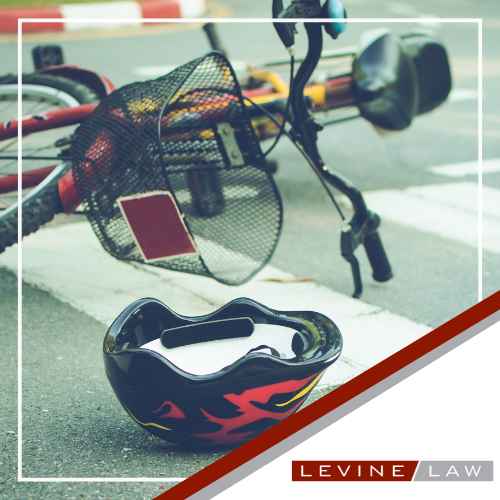
- Do not repair or throw away your bike. A bent frame, a scraped pedal, or a cracked helmet is physical proof of the crash. Photograph it and keep it as it is.
- Take photos and find witnesses. Capture the lane, the bike-lane markings, where the car stopped, and any car door left open in a dooring. Get names and phone numbers, and note nearby stores or cameras — for example, along Colfax Avenue or near the Cherry Creek Regional Trail — before the video is erased. Independent witness information matters most when the driver’s story and yours do not match, which is common once fault and insurance money are at stake.

What actually happens after a bike crash in Denver?
The process moves slower than most people expect, but the pressure starts fast. Crash reports from the Denver Police Department can take several days to finish. Busy trauma units at Denver Health or Saint Joseph Hospital can also slow down the records you need to prove serious injuries.
The driver’s insurance company, though, often calls within a day or two. Bicycle cases bring a common trick. The adjuster hints that the cyclist was hard to see, was not wearing a helmet, or was not “supposed to be there”. These early statements are often used later to blame the rider. So it is fine to give only the basic facts. Do not give a recorded statement until you have talked with a lawyer.
What are the most common causes of bicycle accidents in Denver?
Most Denver bicycle crashes come from driver negligence. The rider is usually not the one at fault. These are the patterns we see most often:
- Unsafe passing — drivers crowd cyclists instead of giving the space the law requires. This is a top cause of crashes on roads like Colorado Boulevard.
- The “right hook” — a driver passes a cyclist and then turns right across the rider’s path.
- The “left cross” — an oncoming driver turns left across the path of a cyclist going straight, often at intersections along Colfax Avenue.
- Dooring — a parked driver opens a door into a rider’s path, a frequent hazard next to on-street parking and painted bike lanes.
- Not yielding at trail crossings — drivers roll through spots where paths like the Cherry Creek Regional Trail and South Platte River Trail meet city streets.
- Distracted, drowsy, or drunk driving — a driver who is texting, too tired to react in time, or driving drunk often does not see a rider until it is too late to stop.
- Failing to yield the right-of-way — a driver who ignores a cyclist’s right of way at an intersection or driveway.
- Losing control of the vehicle — speeding or poor weather can cause a driver to lose control and strike a rider.
- Not giving riders enough room — a driver who does not leave a cyclist enough time to cross or enough space on the road.
- Veering into bicycle lanes — a driver who drifts into a marked bike lane, often while distracted or passing another vehicle.
- Riders entering traffic without looking — a cyclist who crosses into or merges with oncoming traffic without checking first can also contribute to a crash.
Colorado law also gives cyclists specific rights that drivers must respect. That is why showing exactly how a crash happened is central to every claim.
What Colorado bicycle laws affect your case?
Colorado law gives cyclists the same rights and duties as car drivers under C.R.S. § 42-4-1412. It also adds rules written just for riders. These are the ones that most often decide fault:
- The 3-foot passing law — under C.R.S. § 42-4-1003, a driver must leave at least three feet of space when passing a cyclist. Passing too close is against the law and strong proof the driver was careless.
- The Safety Stop law — under C.R.S. § 42-4-1412.5, riders 15 and older may treat a stop sign as a yield sign and a red light as a stop sign. In plain terms: they may roll through when it is safe, and they have the right of way. A cyclist doing this is riding legally, which beats a common insurer argument.
- Same rules as a driver — because cyclists count as vehicle operators, a driver who fails to yield to a cyclist has broken the same rules that protect cars.
One more thing: Colorado does not require adult cyclists to wear helmets. That matters in a claim. Riding without a helmet is legal, but an insurer may still argue it made your injuries worse. That is one more reason to have a lawyer who can push back.
Other equipment is required for cyclists in Colorado in certain situations. Bikers on the road before sunrise or after sunset must have a white headlight and a red rear reflector or light (C.R.S. § 42-4-221).


What types of injuries are common in Denver bicycle accidents?
A cyclist has little to shield them from a car, so injuries are often severe. How serious the injury is usually drives both your recovery time and the value of your claim.
- Skin injuries — lacerations and road rash from skidding across pavement, which can need stitches, skin grafts, or leave lasting scars.
- Head and brain injuries — a rider’s head has no vehicle frame to absorb the impact, so a fall or a direct hit can cause anything from a concussion to lasting problems with memory and thinking, even when a helmet was worn. Head injuries are involved in nearly three-quarters of fatal bike crashes, though helmets cut that risk substantially.
- Facial injuries — an impact with a car, the pavement, or the handlebars can fracture facial bones or cause dental and eye injuries.
- Neck and spinal cord injuries, including paralysis — the sudden jolt of a collision can strain or sprain the neck, and a hard landing on the back can damage the spinal cord and cause partial or full paralysis.
- Broken bones and soft-tissue injuries — the body’s first point of contact absorbs the force of a fall, from fractures in the collarbone, wrists, arms, and legs to sprains, strains, and torn ligaments in the hips, knees, and ankles.
- Internal injuries and organ damage — a direct hit from a vehicle’s bumper, mirror, or handlebar can cause internal bleeding that may not show up right away. These need urgent care at a top-level trauma center like Denver Health.
- Catastrophic, life-changing injuries — the combined force of a fall and a vehicle strike can cause permanent disability and scarring, which call for long-term planning.
Some of these injuries get worse days later, so follow-up care protects both your health and your claim. Beyond the physical harm, many riders also carry psychological trauma after a crash — anxiety, PTSD, or a lasting fear of traffic — and in the most severe cases, a crash is fatal, leaving a family to pursue a wrongful death claim. Nationwide, NHTSA recorded 49,989 injured pedalcyclists in 2023 alone— a reminder of how common these crashes are.
Who is liable for a bicycle accident in Denver?
Fault comes down to negligence — being careless. A driver who fails to share the road safely is responsible for the harm they cause. But depending on the crash, more than one party may share the blame. Here is who may be responsible:
- Careless drivers — the most common at-fault party, usually for unsafe passing, failing to yield, or dooring.
- Employers — an employer can be responsible for its worker. So if a delivery, rideshare, or work driver hits a cyclist on the job, the company may share the blame.
- Vehicle or parts makers — when a defect played a part, or a faulty bike component caused a loss of control.
- Government agencies — the City and County of Denver or the Colorado Department of Transportation (CDOT) may be at fault for a bad road or trail-crossing design, or a dangerous surface they failed to fix. These claims fall under the Colorado Governmental Immunity Act. That law says you must give written notice within 182 days.
Colorado uses a rule called modified comparative negligence— a rule for how blame gets split. If you are 49% or less at fault, your payment drops by your share of the blame. At 50% or more, you get nothing. Insurers know this. So pushing blame onto the cyclist is one of their most common moves.
Attorney insight: What makes Denver bicycle cases complex?
Bicycle cases often come down to inches and seconds no one measured at the time, which makes them harder to prove than an ordinary car crash.
What makes Denver bicycle claims hard:
- Fault is almost always the battleground. Insurers lean on Colorado’s modified comparative negligence rule to pin part of the blame on the cyclist. Because a rider who is 50% or more at fault recovers nothing, shifting even a small share can shrink the payment.
- Colorado’s cyclist statutes often decide who was careless. The 3-foot passing law and the Safety Stop law set the rules a driver must follow. Proving a too-close pass, or that the rider had the right of way, can be central to the case.
- A dangerous road or trail-crossing design adds a hard deadline. When the City or CDOT is responsible for the hazard, the claim falls under the Colorado Governmental Immunity Act, which requires written notice within 182 days. Miss it, and that claim is barred no matter how much of the three-year window is left.
- The bike and helmet are physical evidence. A bent frame or cracked helmet can show the force and direction of the impact. Repairing or throwing them out before they are documented can weaken the claim.
- Uninsured and underinsured drivers shift the case to your own coverage. When the at-fault driver has no insurance or too little, recovery often runs through your own UM/UIM policy. That coverage carries its own notice rules and proof requirements.
Being ready for trial means saving physical and digital evidence, working with medical and crash-reconstruction experts, documenting the long-term impact, and preparing every case as if it may go before a jury.
What damages can you recover after a Denver bicycle accident?
Colorado injury victims can recover two kinds of damages: economic damages and non-economic damages. Non-economic damages are limited by statute C.R.S. § 13-21-102.5. Meanwhile, economic damages have no cap.
Economic damages typically include:
- Current and future medical expenses, from the ER to rehabilitation.
- Lost income and reduced future earning capacity.
- Property damage and other out-of-pocket costs, like your bicycle and gear and a rental, or home and vehicle changes.
Non-economic damages include:
- Emotional distress — the anxiety, fear, and psychological trauma the crash caused.
- Pain and suffering — the physical discomfort and pain from your injuries.
- Scarring and disfigurement — permanent marks from injuries or surgeries.
- Loss of companionship — the strain on your relationships with family.
- Loss of enjoyment of life — being unable to take part in hobbies or daily routines you enjoyed before the crash.
Even though non-economic damages—such as pain and suffering—are inherently personal, they often lead to tangible financial costs, including expenses for mental health therapy or pain medication, or long-term complications like scarring that might hinder your employment. In Colorado, you are entitled to pursue compensation through both economic damages to address these concrete financial impacts and non-economic damages to account for the personal suffering caused by the accident.

A note on Colorado’s damage caps
For cases filed on or after January 1, 2025, Colorado raised its cap on pain-and-suffering money to $1.5 million under HB 24-1472. That is a big jump from the old limit. This $1.5 million cap is the one that applies to a bicycle injury claim. Economic damages, like medical bills and lost wages, still have no cap. In cases of extreme or reckless conduct, the court may also allow punitive damages — extra money meant to punish the wrongdoer — under C.R.S. § 13-21-102. Careful records are what separate a fully valued claim from an undervalued one.
How long do you have to file a bicycle accident claim in Colorado?
You usually have three years from the date of the crash to file a bicycle lawsuit in Colorado. A crash between a car and a bicycle counts as a motor vehicle claim under C.R.S. § 13-80-101. That is longer than the two-year limit on most other injury claims — but the clock still runs out.
If the crash caused a death, the family usually has two years to file a wrongful death claim. Deadlines can change in special cases, like an injured child or a driver who fled. So it is smart to confirm your exact deadline early.
Watch out: a road-hazard or trail claim can carry a 182-day deadline
Was your crash caused by a dangerous road or trail-crossing design, or did it involve a City of Denver vehicle? Then a much shorter clock applies. Under the Colorado Governmental Immunity Act, you must give written notice within 182 days of finding out about the injury. Miss it, and your claim is dead — no matter how much of the three-year window is left. Riders hurt by bad conditions where paths like the South Platte River Trail meet city streets can lose the claim by treating the three-year deadline as the only one.
Why do you need a bicycle accident lawyer in Denver?
A lawyer levels the field against insurers that are built to pay as little as possible. In bicycle cases, that field is tilted from the start. The driver has a car, an insurer, and often the only other account of what happened. The cyclist may be in the hospital.
- Insurance companies guard their profits, often by fighting fault or playing down clear injuries.
- Adjusters may push you toward a fast, low settlement before anyone knows how bad a brain or spine injury really is.
- When a road-design defect or a City vehicle is involved, policies overlap and the strict 182-day deadline makes the claim much harder.
Opponent playbook
Insurers often blame the rider. They may say you ran a stop sign or a red light, skipped a helmet, came out of nowhere” or were too hard to see. But Colorado’s Safety Stop law (C.R.S. § 42-4-1412.5) and 3-foot passing law (C.R.S. § 42-4-1003) often show the rider was following the law and the driver was not. This matters because of Colorado’s 50% bar rule: even a small share of blame cuts your payment, and 50% or more wipes it out. A lawyer counters by securing the DR 3447 report, the damaged bike, and any nearby video before that evidence is lost.
What does the bicycle accident claim process look like?
Most claims follow the same path: a free consultation, an investigation, a demand and negotiation, and — if the insurer will not be fair — a lawsuit in Denver District Court.
- Free consultation and case review — we look at the crash, your injuries, and every source of coverage, including the driver’s policy and any of your own uninsured or underinsured driver coverage.
- Investigation and evidence — we gather the DR 3447 report, medical records, the saved bike and helmet, scene evidence, video, and witness statements.
- Demand and negotiation — we send a documented demand and negotiate with the insurer.
- Settlement or trial — if talks stall, we file suit in the Second Judicial District (Denver District Court, 1437 Bannock St) and get ready for trial.
How long this takes depends on how serious the injuries are and on the court’s schedule.
How do you choose the right Denver bicycle accident lawyer?
Look for real experience with serious motor vehicle and bicycle cases, knowledge of Denver courts and insurers, clear communication, and true trial readiness — not marketing slogans.
- Does the firm have a relevant experience?
For more than 20 years, Levine Law has represented injured people across the Denver metro — in bicycle, car, and cases handled by our motorcycle accident attorney Denver team, as well as catastrophic-injury and wrongful-death claims. Its results for vulnerable road users include a $925,000 settlement for a pedestrian struck by a red-light runner and a $770,000 verdict for injuries from a vehicle crash. A track record with cases like yours matters far more than advertising.
- Does the firm have a strong grasp with the local conditions?
Choose a lawyer who knows how cases move through Denver District Court (Colorado’s Second Judicial District), knows Colorado’s cyclist laws, and knows how Front Range insurers work. Levine Law is based in Denver’s Cherry Creek area. Founding partner Jordan S. Levine helped set Colorado law on holding insurers accountable in Crowell v. ICAO — the same insurer accountability that decides many bicycle claims.
- Are the attorneys of the firm ready to go to trial?
The strongest settlements often come when the insurer knows your lawyer is ready to try the case. Levine Law’s attorneys hold an AV Preeminent rating — Martindale-Hubbell’s highest peer rating for a lawyer’s legal ability and ethical standards — and have been recognized by Super Lawyers and the National Trial Lawyers (these recognitions reflect each group’s own selection criteria).
- Is the firm clear in their fees?
Levine Law works on a contingency, “No Win, No Fee” basis — no attorney’s fee unless the firm recovers for you — and consultations are free. Ask any lawyer to explain, in writing, how fees and costs come out of a recovery.
Client testimonials
Levine Law’s clients often describe steady communication and close attention after a serious crash.
“The customer service I experienced with this firm I would wish every company could live up to.” — GS, five-star review
You can read more verified reviews on our Levine Law Reviews page.
Disclaimer: Client reviews are individual experiences and are not a guarantee of any particular result.
Case results that reflect real experience
A cyclist is just as exposed as someone on foot when a driver fails to yield. Levine Law has recovered for vulnerable road users hurt that way in other kinds of crashes:
- $925,000 settlement — a pedestrian crossing the street was hit by a driver who ran a red light, breaking both of the client’s legs.
- $1.3 million settlement — a driver ran a red light and struck the client, breaking his leg.
More outcomes are listed on our Cases & Verdicts page.
Disclaimer: Prior results do not guarantee a similar outcome; every case is decided on its own facts.
Areas served
Levine Law represents bicycle accident victims throughout the Denver metro and Front Range, including:
We also handle related cases, including dooring accidents, car accidents, and pedestrian accidents across the Denver metro.
Local resources
Hospitals & Emergency Care in Denver
- Denver Health Medical Center — the only Level I trauma center in the City of Denver; 777 Bannock St, Denver, CO 80204
- Saint Joseph Hospital — 1375 E 19th Ave, Denver, CO 80218
- HCA HealthONE Rose Medical Center — 4567 E 9th Ave, Denver, CO 80220
- HCA HealthONE Presbyterian/St. Luke’s Medical Center — 1719 E 19th Ave, Denver, CO 80218
Crash reports & agencies
- Colorado DMV — Crash Records — request your Colorado Traffic Crash Report (DR 3447). Denver Police Records line: 720-913-6029
- Colorado DMV — Report a Crash
- Denver Vision Zero — Crash Data Dashboard
Courts
- Denver District Court (Second Judicial District) — City and County Building, 1437 Bannock St, Denver, CO 80202
Disclaimer: We provide these resources for convenience only; we do not endorse or profit from them.
Frequently asked questions
How long do I have to file a bicycle accident claim in Colorado?
You usually have three years from the crash date, because a crash between a car and a bicycle is a motor vehicle claim under C.R.S. § 13-80-101. If a dangerous road design or a City of Denver vehicle was involved, written notice is due within 182 days, so your real deadline can be far shorter.
What is Colorado’s 3-foot passing law?
Under C.R.S. § 42-4-1003, a driver must leave at least three feet of space when passing a cyclist. Passing too close is against the law and strong proof the driver was careless. Drivers often crowd riders on narrow roads like Colorado Boulevard, which is where this rule matters most.
Can I recover if I wasn’t wearing a helmet in Denver?
Yes. Colorado does not require adult cyclists to wear helmets, so riding without one is legal. Under the blame-splitting rule (C.R.S. § 13-21-111), you can still recover if you are 49% or less at fault. Insurers may argue a missing helmet made your injuries worse, but that does not bar your claim.
What is a dooring accident and who is at fault?
Dooring happens when someone opens a car door into the path of a passing cyclist. The person who opened the door is usually at fault for not checking for traffic first. These crashes are common next to on-street parking and painted bike lanes in Denver. See our dooring accidents page for more.
Does the Safety Stop law help my case?
It can. Under C.R.S. § 42-4-1412.5, riders 15 and older may treat a stop sign as a yield sign and a red light as a stop sign when it is safe. If you rode legally under this law, it can beat an insurer’s claim that you ran a sign at an intersection along Colfax Avenue or elsewhere in Denver.
Contact a Denver bicycle accident lawyer today
If you or a family member was injured in a Denver-area bicycle crash, Levine Law is available 24/7 to review your claim and explain your options at no cost.
Call 303-333-8000 or contact us online for a free, no-obligation consultation.
Attorney Review Disclosure
This content has been reviewed by the attorneys at Levine Law to help ensure its accuracy and compliance with applicable Colorado law. Legal services are provided by attorneys licensed to practice in the State of Colorado.
Denver Office
Levine Law LLP
4500 Cherry Creek S Dr #400
Denver, CO 80246
24/7 Hotline: (303) 333-8000
Other Cases We Take On
Beyond bicycle accidents, Levine Law helps injured Coloradans across a range of practice areas:
- Car Accidents
- Truck Accidents
- Motorcycle Accidents
- Uber & Lyft / Rideshare Accidents
- Pedestrian Accidents
- Slip & Fall Accidents
- Premises Liability
- Traumatic Brain Injuries
- Spinal Cord Injuries
- Wrongful Death
- Nursing Home Abuse
- Catastrophic Injury
This content is for informational purposes only and does not constitute legal advice. Reading it does not create an attorney-client relationship. Past results do not guarantee future outcomes; every case is evaluated on its own facts. This content has been prepared for review by Colorado-licensed attorneys at Levine Law.


