


What happens if the insurance company says the app was off when your Glendale Uber or Lyft crash happened?Colorado’s rideshare insurance statute (C.R.S. § 40-10.1-604) ties coverage to the driver’s app status. If the insurer says the app was off, the driver’s personal policy typically applies. That’s often just Colorado’s 25/50/15 minimum — a fraction of Uber’s or Lyft’s $1,000,000 trip policy. A lawyer can check whether that’s actually true. A Glendale car accident lawyer can review the available trip records, insurance policies, and crash evidence to determine whether that position is supported by the facts. |
|---|
You didn’t control the car. Whether you were leaving a bar near Cherry Creek or catching a ride home past Infinity Park, you’re now faced with a critical question: whose insurance pays? The answer depends entirely on the driver’s app status at the moment of impact. Because those digital records belong to Uber or Lyft—and won’t stay available forever—securing them quickly is essential.
A lawyer who already knows this terrain can request those records and read them correctly. Here’s what that looks like at Levine Law:
- 20+ years of experience: Founder Jordan S. Levine and the Levine Law team have served injured people across the Denver metro, including Arapahoe County, for more than 20 years. Learn about our firm.
- Proven results: The firm’s case results and verdicts include multi-million-dollar recoveries for injured clients across Colorado.
- Rideshare and other crash cases: The firm handles rideshare collisions and every other car accident claim in Glendale.
- Free consultation: Contact our Denver office to find out which policy covers your crash.
That dispute over the app is easier to settle the sooner you act. Uber and Lyft control that data, not you, and it doesn’t stay on their systems forever. Here’s where to start.
What should you do after a rideshare accident in Glendale?
Call 911 and get checked by a doctor first. Then save what the app is showing you before that screen clears. Who writes the crash report depends on where you were. On Glendale’s city streets, the Glendale Police Department (303-759-1511) prepares the report. On I-25, just past the city’s edge, the Colorado State Patrol handles it instead. Once the report is filed, you can request a copy through the Colorado DMV’s crash-records portal.
The app data is one of the few pieces of evidence you can preserve yourself. It may be a key factor in deciding which policy covers your injuries. These steps help protect it and the rest of your claim:
- Photograph the trip screen before it clears. The receipt, the driver’s name, the vehicle, and the status shown can matter later if the coverage period is disputed.
- Confirm that a report gets filed. Colorado’s crash-reporting statute (C.R.S. § 42-4-1606) requires a report for any crash that injures someone or damages property. Insurers on both sides are likely to rely on it.
- Get checked out, even if you feel fine. Rose Medical Center is minutes away on East 9th Avenue. Denver Health runs the nearest Level I trauma center. A same-day record helps connect your injury to the crash.
- Get names and numbers before people leave. The driver, any other drivers, and any willing witnesses all belong on that list. Note exactly where you were, such as “South Colorado Boulevard at Leetsdale Drive.” An outside account often settles two conflicting stories.
- Hold off on a recorded statement. Wait until you’ve talked to a lawyer before giving one to an insurance adjuster, especially in the first few days.
What actually happens after an Uber or Lyft crash in Glendale?
A Glendale rideshare claim moves slower than an ordinary two-car crash. That’s because someone first has to establish what the app was doing at the moment of impact. The case moves through four stages, and each one answers a different question.
- Right after the crash. The responding officer documents the scene using Colorado’s standard crash report if one is called. The rideshare company’s own systems likely log the trip status automatically.
Why it matters: this second record exists whether anyone asks for it or not, and it doesn’t stay available indefinitely.
- In the days that follow. Medical treatment starts building the record an insurer will eventually answer to.
Why it matters: this is also the best window to request trip data, before routine deletion makes it harder to get.
- Once treatment stabilizes, a treating doctor can describe what your recovery will likely look like.
Why it matters: only then can a claim be valued with any real accuracy.
- When a demand goes out, which insurer responds depends on which coverage tier applied at the moment of the crash.
Why it matters: this step waits on that earlier question being answered first.
Neither Uber nor Lyft employs the drivers on its platform. Both treat them as independent contractors. That’s a large part of why a Glendale rideshare claim tends to focus on the insurance question rather than on the company itself.


What usually causes Uber and Lyft accidents in Glendale?
The causes here are mostly ordinary: fatigue, distraction, hurried stops, and deferred vehicle maintenance. What makes them more likely in Glendale is geography. The city is barely half a square mile, and Denver surrounds all of it. Most rideshare trips begin or end just outside the city line. Many of them carry riders in and out of the Cherry Creek shopping and nightlife district, or to and from Infinity Park events.
- Fatigue and split attention. Long hours and a second job add up fast. So do constant glances at a map or the next ride request. All of it pulls focus away from stop-and-go traffic on South Colorado Boulevard and Leetsdale Drive.
- Speed and shortcuts. Per-trip pay can reward finishing a ride quickly. That pressure shows up as sudden stops and rushed pickups near the Cherry Creek shops.
- Deferred maintenance. Rideshare companies leave upkeep to individual drivers. Worn brakes and bald tires turn up more often than they should.
- Ordinary bad driving, amplified. Impaired, distracted, and speeding drivers cause plenty of crashes on their own. Glendale’s busy roads and nightlife can create more opportunities for these behaviors to contribute to a collision. Statewide, 689 traffic deaths occurred in Colorado in 2024; 365 involved multiple vehicles, 237 were speed-related, 269 involved alcohol impairment, and 170 involved unrestrained occupants.
South Colorado Boulevard, Leetsdale Drive, and I-25 all funnel heavy commuter traffic through this same small footprint. Congestion here is close to constant.
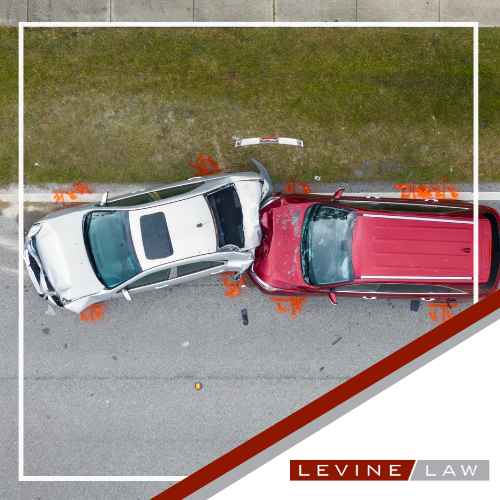
What injuries come up most often in these crashes?
These injuries look like most crash injuries, with one twist. A rideshare passenger often has no real chance to brace before impact. A driver who sees the other car coming tenses up. A passenger looking at a phone usually doesn’t, and that changes how the force travels through the neck, back, and shoulders.
- Whiplash and soft-tissue strain are especially common in the rear-end crashes that happen near Cherry Creek’s crowded pickup zones.
- Fractures to the wrist, forearm, ribs, or collarbone, often from bracing against a door or seatbelt.
- Traumatic brain injuries, ranging from a mild concussion to damage that lasts well past the ER visit.
- Spinal cord injuries from a hard blow to the spine, including partial or complete paralysis in serious cases.
- Internal bleeding, which often stays silent at the scene. This is one reason prompt evaluation at a trauma center like Denver Health matters.
Some of these injuries surface hours or days later. Getting checked promptly protects your health and your claim at the same time. A passenger’s own fault is rarely at issue here. That topic gets its own section further down this page.
How does rideshare insurance work in Colorado?
The driver’s app status at the moment of the crash is the key factor in which insurance pays. That rule comes from Colorado’s rideshare insurance statute passed in 2014, which calls Uber, Lyft, and similar apps transportation network companies. The Colorado Public Utilities Commission enforces it today.
The statute sets a minimum amount of insurance for each phase of a trip. It also closes a gap: a driver’s personal auto policy doesn’t have to cover time spent logged into the app. So the statute makes sure other coverage exists for that time instead. Fault for the crash itself is worked out under ordinary Colorado negligence law, alongside the coverage question, inside the same claim.
Here’s how coverage breaks down across the three periods a trip can be in:
Colorado added one more layer of protection in 2022. Under HB22-1089, now C.R.S. § 40-10.1-604(2.5), Uber and Lyft must carry uninsured-motorist coverage for the driver and each rider. The minimum is $200,000 per person and $400,000 per occurrence, and the company may not reject it. It runs from ride acceptance until the rider leaves the vehicle. It doesn’t apply while the app is off or during Period 1.
Your own auto policy may carry separate uninsured and underinsured motorist coverage under Colorado’s general UM/UIM law (C.R.S. § 10-4-609). Every figure above is a floor, not a ceiling, so it’s worth checking whether that coverage applies to your crash too.
Who can be held responsible after a Glendale rideshare accident?
The rideshare driver, another motorist, or, depending on the circumstances, another party may be held responsible for a Glendale rideshare accident if their negligence contributed to the crash. Separately, an injured passenger, driver, pedestrian, or cyclist may have a claim for compensation. More than one person can be injured in the same crash, and more than one party may share responsibility.
Who may be responsible?
Responsibility depends on whether someone’s negligence contributed to the crash. In general, negligence means failing to use the level of care a reasonably careful person would use under similar circumstances. For example, a rideshare driver may be negligent by speeding, driving while distracted, or failing to yield, while another motorist may be negligent by running a red light or following too closely.
The evidence may show that the rideshare driver, another motorist, or multiple parties contributed to the collision. Colorado’s comparative negligence rules can affect how responsibility and damages are allocated when more than one person contributed to the crash.
Who may have a claim?
- Passengers. A passenger injured in the rideshare vehicle may have a claim against one or more parties responsible for the crash. If the passenger did not contribute to the collision, comparative fault generally would not reduce their damages.
- People in the other vehicle. The driver and passengers in a vehicle struck by the rideshare car may have claims if they were injured.
- Pedestrians and cyclists. Someone struck while using a crosswalk, bike lane, or intersection, such as Colorado Boulevard and Leetsdale Drive, may have a claim against a responsible driver or other liable party.
- The rideshare driver. If another motorist caused the crash and the rideshare driver was injured, the rideshare driver may have a claim against that motorist and applicable insurance coverage.
Why liability gets complicated fast
Fault in Colorado follows a simple rule: a driver owes the people around them reasonable care. That means the care a sensible driver would use under the same conditions. Where a driver falls short of that, and the gap causes the crash, the cost falls on them and their insurer.
This gets complicated when more than one person shares the blame. For example, suppose a Lyft driver is traveling 10 mph over the speed limit when another driver runs a red light and hits the Lyft vehicle. The evidence might show that the other driver caused most of the crash, but the Lyft driver’s speeding also contributed to the severity or circumstances of the collision.
If a court assigns 80% of the fault to the other driver and 20% to the Lyft driver, each driver’s share can affect the damages and insurance issues involved. A vehicle owner or, in some cases, another party may also have legal responsibility, and different insurance policies may apply to each.
Colorado’s modified comparative negligence rule turns those percentages into money: your recovery shrinks by your own share of fault, and a share of 50% or more bars recovery entirely.
A rideshare passenger’s fault is usually not at issue, but Colorado’s seatbelt law adds one wrinkle. C.R.S. § 42-4-237 requires a seatbelt for the driver and front-seat passengers, not for adults riding in the back. Where it does apply, going unbelted can only reduce the pain-and-suffering portion of a claim. It can’t touch medical bills or lost income.
What can you recover after a Glendale rideshare accident?
Colorado divides damages along one line: whether the loss comes with a receipt. Economic damages are the ones that do. Non-economic damages cover what the injury did to you as a person, and C.R.S. § 13-21-102.5 caps only that second category.
Economic damages typically include:
- Medical costs, from the first ER visit through however long treatment runs.
- Lost wages, plus diminished future earning power if the injury is permanent.
- Property and out-of-pocket costs, including the vehicle itself and a rental while it’s repaired.
Non-economic damages include:
- Pain, in the physical sense.
- Emotional and psychological harm, such as anxiety or intrusive memories after a serious wreck.
- Diminished enjoyment of life, covering what the injury keeps you from doing.
- Harm to family relationships caused by the injury.
The same statute carves out one more category: physical impairment or disfigurement. That category stands apart from both lists above, and the non-economic cap doesn’t touch it. It covers permanent effects like scarring, amputation, or lost function. Colorado treats that harm as its own kind of loss.
Why calculating damages can be complicated
The value of a Glendale rideshare claim depends on the extent of the injury, the losses it causes, and the insurance coverage available. Insurance limits can become important when damages approach or exceed the amount of coverage available. For example, a serious injury with substantial medical bills, lost income, and future care needs could quickly exceed a driver’s personal policy limits, making it important to determine whether Uber or Lyft coverage or other applicable insurance is available.
For civil actions filed on or after January 1, 2025, Colorado’s 2024 damage-cap law (HB 24-1472) generally sets the cap on noneconomic damages at $1.5 million, subject to the statute’s terms and future inflation adjustments. That limit applies to noneconomic losses, such as pain and suffering, rather than economic losses such as medical expenses and lost income. In cases involving conduct that meets Colorado’s legal standard for exemplary damages, C.R.S. § 13-21-102 may allow additional damages intended to punish the defendant rather than compensate the injured person.
How long do you have to file a claim after a Glendale rideshare accident?
Colorado’s filing deadline (C.R.S. § 13-80-101) gives you three years from the crash to get a lawsuit on file. A fatal crash shortens that window to two years for a wrongful death claim. Glendale sits in Arapahoe County. So a suit here is typically filed in the Arapahoe County District Court, 18th Judicial District, at 7325 S Potomac St. in Centennial.
Treatment, negotiation, and an adjuster’s promise to keep reviewing your file can all still be underway when that three-year window closes. None of that holds the deadline open. Once it passes, a court generally won’t hear the case at all, however strong the evidence might otherwise be.
Pitfall alert
If a public vehicle was involved, the timeline can change. An RTD bus or City of Glendale vehicle may bring the Colorado Governmental Immunity Act into play, which generally requires written notice of the claim within 182 days after discovering the injury. Missing that deadline can bar a claim against the public entity, even if the ordinary statute of limitations has not yet expired.
That is one deadline worth identifying early. Claims involving a government entity can have additional procedural requirements, so it is important to determine who owns the vehicle and which deadlines apply before assuming the ordinary personal-injury timeline controls.
Why do you need a lawyer after a Glendale rideshare accident?
A Glendale rideshare claim can become complicated quickly when several insurance policies, competing versions of the crash, or a government vehicle are involved. A lawyer’s role is not simply to file a claim. It is to work through the coverage, evidence, deadlines, and damages questions that can be difficult to resolve from the passenger’s side of the claim.
Where the complications usually begin
- Which coverage applies? Uber and Lyft keep trip-status and other records that can help establish what the driver was doing when the crash occurred. A lawyer can request and preserve those records while reviewing the applicable insurance policies.
- Is more than one policy involved? The claim may involve the rideshare driver’s coverage, another driver’s insurance, applicable rideshare coverage, or your own UM/UIM coverage. Identifying the policies is only the first step; their terms and the circumstances of the crash determine how they may apply.
- Is a government vehicle involved? An RTD bus or City of Glendale vehicle can bring the Colorado Governmental Immunity Act into the case. The Act generally requires written notice within 182 days after discovering the injury. A lawyer can identify that issue early and make sure the claim is evaluated under the rules that apply to public entities.
- What are the damages actually worth? The answer depends on the injury, treatment, lost income, future needs, noneconomic harm, and available insurance—not simply the first settlement number an insurer puts forward. Levine Law’s case results provide examples of past outcomes, but each case depends on its own evidence and circumstances..
Uber and Lyft both treat their drivers as independent contractors. So a claim is normally made against the insurance policies above, not against the companies directly.
What a lawyer can do with those questions
The useful work is often behind the scenes: preserving trip records, identifying every potentially responsible party, reviewing the available insurance, coordinating the medical evidence, and determining which losses can be supported by the record. If liability or coverage remains disputed, the same investigation can provide the foundation for negotiations or litigation.
Uber and Lyft generally classify their drivers as independent contractors, but that does not end the analysis. The important questions are who may be legally responsible, what coverage applies, and what the evidence can establish about the injury and resulting losses.

How does an Uber or Lyft accident claim work in Colorado?
Most Glendale rideshare claims move through four stages. A free case review comes first, then evidence-gathering built around the app records. Next comes a documented demand with negotiation behind it. For a minority of cases, that’s followed by a filing in Arapahoe County District Court. Many claims resolve during negotiation without ever reaching a courtroom.
- Case review. We map out the crash, your injuries, and which policy or policies might pay.
- Evidence gathering. We collect the trip and status records, the crash report, medical records, and witness statements while they’re still easy to get.
- Demand and negotiation. Once that file is built, we send a documented demand to the right insurer and start negotiating.
- Filing suit. For a minority of cases, we file in Arapahoe County District Court.
What can change the course of your case?
A few specific facts tend to move a Glendale claim in a different direction. Whether the app status is disputed can add months to the timeline. Whether a public vehicle was involved brings the 182-day notice deadline into play. And how serious or how slow to resolve your injury is can delay a fair demand until your prognosis is clear. Reviewing these facts early, before they harden into a dispute, is usually where a lawyer helps most.
How do you choose a lawyer for a rideshare accident claim?
A firm’s track record and its experience with Colorado’s rideshare rules are things you can verify yourself, before you ever sign anything. Here’s how Levine Law measures up:
- What has it actually recovered?
A firm’s past settlements and verdicts show whether it gets real results, not just promises. For more than 20 years, Levine Law has represented injured people across the Denver metro. Motor-vehicle results include a $1.3 million settlement and a $256,000 verdict (see our case results). Past results don’t guarantee future outcomes.
- Has the firm applied Colorado’s rideshare rules to a real dispute?
Rideshare claims turn on statutes most personal-injury firms rarely touch, so hands-on experience with them matters. Reaching the right policy at Levine Law means working with C.R.S. § 40-10.1-604 and the driver-and-rider coverage required by HB22-1089. Ask any firm how they’ve handled a disputed coverage period before.
- Do they know the court your case would be heard in?
Local court familiarity can shape how a case is handled and how fast it moves. Founder Jordan S. Levine helped set Colorado precedent on holding insurers accountable in Crowell v. ICAO. The firm knows the 18th Judicial District courts where Glendale claims are heard.
- Does its recognition come from outside the firm?
Peer ratings and outside legal directories are harder to fake than a firm’s own marketing. Levine Law’s attorneys hold Martindale-Hubbell’s AV Preeminent rating, a peer-evaluated distinction. They’re also recognized by Super Lawyers and the National Trial Lawyers.
- What does it cost if there’s no recovery?
A contingency fee means the firm only gets paid if you do, which is worth confirming upfront. Levine Law takes rideshare cases on contingency, with a free consultation and no fee unless the case pays.
What do clients say about working with Levine Law?
Levine Law’s reviews are published under the firm’s own name on Google, Yelp, Avvo, and Lawyers.com. Anyone can read them in full there.
“I hired Levine Law after a car accident. They started right away and helped me get through all the problems that come with it. Anytime I had a question, they were available. I would highly recommend them.” — Angel O., Yelp review.
You can read more verified reviews on our site.
Disclaimer: Client reviews reflect individual experiences and are not a guarantee of any particular result.
What results has Levine Law obtained in similar cases?
Injuries from a rideshare crash look much like injuries from any other serious wreck on Glendale’s roads. Here’s what Levine Law has secured for clients hurt the same way:
- $1.3 million settlement — a driver ran a red light and broke the client’s leg.
- $256,000 verdict — a rear-end collision left the client with a neck injury that affected his vision.
- $200,000 settlement — a three-car rear-end crash left the client with a sprained hand and a cracked vertebra.
See more on our Cases & Verdicts page.
Disclaimer: Prior results don’t guarantee a similar outcome. Every case is decided on its own facts.
What areas does Levine Law serve near Glendale?
We represent rideshare crash victims throughout Glendale, including near the Cherry Creek shopping and nightlife district, around Infinity Park, and along South Colorado Boulevard, Leetsdale Drive, and I-25.
We also serve nearby communities:
Within Glendale, we also handle car accidents and other serious-injury claims. See our full Glendale personal injury practice.
Where can you find local resources after a crash?
Hospitals & emergency care
- Rose Medical Center — the nearest ER, minutes from Glendale. 4567 E 9th Ave, Denver.
- Denver Health Medical Center — the nearest Level I trauma center. 777 Bannock St, Denver.
- Swedish Medical Center — a Level I trauma center in nearby Englewood.
Crash reports & agencies
- Glendale Police Department (303-759-1511) — investigates crashes on Glendale’s city streets.
- Colorado State Patrol — investigates crashes on I-25 near Glendale.
- Colorado DMV crash records — request your official crash report.
- Colorado Public Utilities Commission — regulates rideshare companies in Colorado.
Courts
- Arapahoe County District Court, 18th Judicial District — 7325 S Potomac St, Centennial, CO 80112.
We provide these resources for convenience only. We don’t endorse or profit from them.
Glendale Uber and Lyft accident FAQ
Which insurance pays if I was hurt as a passenger in a Glendale Uber or Lyft?
It depends on the driver’s app status at the moment of the crash. A closed app means the driver’s personal policy, at Colorado’s 25/50/15 minimum. An accepted ride means Uber’s or Lyft’s $1,000,000 policy applies instead.
Can I sue Uber or Lyft directly after a Glendale crash?
Usually not directly, since both companies classify their drivers as independent contractors, your claim generally runs to the required insurance coverage instead. A claim against the company itself is possible if its own conduct, such as inadequate driver screening, contributed to the crash.
What if the Uber or Lyft driver who hit me was uninsured?
It depends on when the crash happened. If a ride had been accepted, Uber’s or Lyft’s $1,000,000 policy usually covers it instead. If the app was off, your own uninsured motorist coverage, if your policy includes it, may need to step in.
How long do I have to file a claim after a Glendale rideshare accident?
Three years from the crash date under C.R.S. § 13-80-101. If a public vehicle was involved, a separate 182-day notice deadline runs alongside it.
Is there a cap on what I can recover?
Only on non-economic damages, capped at $1.5 million for cases filed on or after January 1, 2025. Economic damages, and the separate category of physical impairment or disfigurement, aren’t subject to that cap.
How much does a Glendale rideshare accident lawyer cost?
Nothing upfront. Levine Law takes these cases on contingency. The fee comes out of a settlement or verdict, never out of pocket, and never unless we win. The initial consultation is free.
Talk to a Glendale Uber and Lyft accident lawyer today
If you or someone in your family was hurt in a Glendale rideshare crash, Levine Law is ready to help, day or night. We’ll dig into your claim, sort out which policy applies, and walk you through your options at no cost.
Contact us online for a free, no-obligation consultation.
Attorney Reviews and Office Information
This content has been reviewed by the attorneys at Levine Law for accuracy and compliance with Colorado law. Legal services are provided by attorneys licensed to practice in Colorado.
Glendale Office
Levine Law LLC
4500 Cherry Creek S Dr #400, Glendale, CO 80246, United States
24/7 Hotline: (303) 333-8000
Other Cases We Handle in Glendale
Rideshare claims are one part of what we handle. Our other Glendale practice areas include:
- Car Accidents
- Personal Injury
- Truck Accidents
- Motorcycle Accidents
- Pedestrian Accidents
- Slip & Fall Accidents
- Traumatic Brain Injuries
- Spinal Cord Injuries
- Wrongful Death
- Catastrophic Injury
This content is for informational purposes only and doesn’t constitute legal advice. Reading it doesn’t create an attorney-client relationship. Past results don’t guarantee future outcomes; every case is evaluated on its own facts.


