



Does the driver’s app status change your Uber or Lyft claim?Yes — under C.R.S. § 40-10.1-604, which policy pays depends on whether the driver was offline, waiting for a match, or actively transporting a passenger at the moment of impact, with coverage running from the driver’s personal policy up to Uber’s or Lyft’s $1,000,000 policy. A car accident attorney can help determine whether the driver was offline, waiting for a ride request, or transporting a passenger and identify the coverage available for a crash on I-225 or a Peña Boulevard airport route. |
Imagine you booked a Lyft home from Southlands or an Uber to Buckley Space Force Base, and the driver caused the crash. Suddenly, you may be dealing with multiple insurance companies, each pointing to someone else to pay your claim. With busy roads like I-225 and the Colfax corridor, figuring out which policy applies can be complicated. Sorting out which coverage actually applies shouldn’t be your job while you’re recovering — an Aurora personal injury lawyer can take that fight on for you.
- 20+ years of experience: At Levine Law, founder Jordan S. Levine and our Aurora injury attorneys have helped injured Coloradans for more than 20 years. Learn about our firm and the team who would handle your claim.
- Proven results: The firm has won multi-million-dollar case results and verdicts for injured clients, and our client reviews show the care behind that work.
- Every kind of crash case: From Aurora car accidents to rideshare and serious-injury claims — on a contingency basis, so you pay no fee unless we win.
- Free consultation: Contact our Denver office, and see the awards and recognition our attorneys have earned.
In Colorado, you usually have three years to file a rideshare crash claim (C.R.S. § 13-80-101). Acting early protects your evidence and the driver’s app-status data before it is lost.
What should you do immediately after an Uber or Lyft accident in Aurora?
Call 911, get medical care, and save proof of the ride before you close the app. In Aurora, an Aurora Police Department officer will fill out a Colorado Traffic Crash Report (the DR 3447). You can order a copy later through Crashdocs for about $10, or call the APD Records Section at 303-739-6320.
Rideshare cases turn on proof of the trip and the driver’s status. Protect that first:
- Screenshot the trip. Save the ride receipt, driver name, vehicle, and trip status in your Uber or Lyft app. This is the clearest proof of which insurance applies.
- Report the crash. The law requires you to report any crash with injury, death, or property damage right away (C.R.S. § 42-4-1606). Aurora Police or the Colorado State Patrol on I-225 will investigate and file the DR 3447.
- See a doctor — even if you feel “fine”. UCHealth University of Colorado Hospital on the Anschutz Medical Campus is a Level I trauma center. Quick records tie your injuries to the crash.
- Collect everyone’s details. Get the rideshare driver, other drivers, and any witnesses. Note the exact spot, such as “I-225 near the Mississippi Avenue exit”. Independent witness contact info matters most when the drivers’ accounts conflict later — a common problem once insurance money is at stake.
What actually happens after a rideshare crash in Aurora?
Expect a slower, more crowded process than an ordinary two-car crash. Because Uber and Lyft classify their drivers as independent contractors rather than employees, the company’s insurer, the driver’s personal carrier, and potentially your own policy can all get pulled into the claim — and each one has a financial incentive to argue a different policy should pay first. That standoff usually doesn’t resolve until someone can show exactly what the driver’s app was doing at the moment of impact: logged out, logged in and idle, or mid-trip.
Paperwork adds its own delay. Your Colorado Traffic Crash Report (DR 3447) from the Aurora Police Department typically takes several business days to post to Crashdocs. In that gap, an adjuster may already be calling — sometimes with a quick, low settlement offer, sometimes asking for a recorded statement before anyone has confirmed which policy is even on the hook. You are only required to share basic facts with an insurer at this stage; a recorded statement can wait until your app-status evidence is locked down.
What are the most common causes of Uber and Lyft accidents in Aurora?
Most Aurora rideshare crashes come down to a handful of recurring driver-behavior problems — speeding, distraction, and the rush between fares — clustered at the same corridors and interchanges rideshare drivers cross on every pickup, drop-off, and airport run. Here’s where and how that plays out in Aurora:
- Speeding and signal violations at a handful of high-crash intersections and interchanges. Aurora Police cite speeding, red-light running, and pedestrian violations as the recurring causes at hot spots like East Iliff Avenue and Chambers Road — where one resident described drivers hitting 70 to 80 mph in a posted 45 mph zone — and the I-225/Parker Road interchange, where a targeted enforcement push cut crashes by 86% in just six weeks. These, along with East Colfax Avenue at Peoria Street and East Quincy Avenue at South Parker Road, are routes rideshare drivers cross constantly near Southlands, Buckley Space Force Base, and the airport.
- App distraction. A glance at the map, an incoming ride request, or a passenger’s text pulls a driver’s eyes off the road for a beat — costly in the merge lanes of I-225 or the short light cycles along Colfax.
- Rushing between rides. Pay is tied to the trip, not the clock, so drivers have an incentive to accept back-to-back fares and cut corners — an illegal U-turn or a curb stop outside a Southlands entrance rather than circling for a legal spot.
- Fatigue on long shifts. Many drivers stack rideshare hours on top of a full-time job, or run late loops to Denver International Airport via Peña Boulevard and E-470, with few state limits on how long they can stay logged into the app.
- Deferred vehicle maintenance. Uber and Lyft don’t inspect vehicles between rides, so worn brakes and bald tires often go unaddressed until they fail.
That local pattern lines up with the citywide count: Aurora Police have logged nearly 2,920 crashes and 15 traffic deaths through mid-2026. The same mix of causes shows up statewide: of Colorado’s 689 traffic deaths in 2024, 365 — 53% — happened in multiple-vehicle crashes, and the CDOT attributed roughly three in ten (210) to an impaired driver.
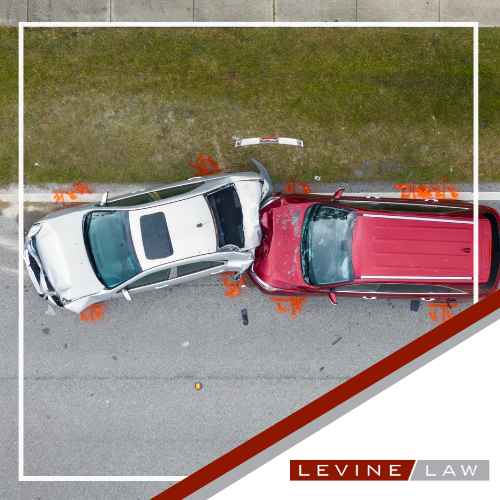
What types of injuries are common in Aurora rideshare accidents?
Rideshare injuries look like any other car-crash injuries, from minor strains to life-changing harm. How severe the injury is usually drives both the medical timeline and the value of the claim. The injuries we see most:
- Whiplash and soft-tissue injuries (strains to muscles and ligaments), common for passengers in rear-end crashes.
- Broken bones in the arms, ribs, wrists, and collarbone.
- Traumatic brain injuries (TBI) — head injuries that range from a concussion to lasting harm.
- Spinal cord injuries, which can cause partial or full paralysis.
- Internal injuries and bleeding, which may not show symptoms right away. These need urgent care at a Level I trauma center like UCHealth University of Colorado Hospital on the Anschutz Medical Campus.
Passengers should get checked even if they feel fine. Some injuries show up days later. And the passenger is almost never at fault. (See our passenger and child injuries page.)
How does rideshare insurance work in Colorado?
Colorado was the first state to regulate rideshare companies (TNCs), back in 2014. Here, rideshare insurance changes with the driver’s app status under C.R.S. § 40-10.1-604. The Colorado Public Utilities Commission (PUC) oversees these rules. Which policy pays depends on what the driver was doing at the moment of the crash:
- App OFF (driver not logged in) — only the driver’s personal car insurance applies. Colorado’s minimum coverage is $25,000 per person, $50,000 per crash, and $15,000 for property damage.
- App ON, waiting for a ride request — the company adds backup coverage of $50,000 per person, $100,000 per crash for injuries, and $30,000 for property damage.
- Ride accepted, driving to you, or carrying a passenger — Uber and Lyft carry $1,000,000 in coverage for the crash.
Colorado also added protection with HB22-1089. It requires uninsured/underinsured motorist (UM/UIM) coverage during rideshare trips. UM/UIM coverage pays when the at-fault driver has no insurance or too little. These limits do not always cap what you can recover. A claim may also reach the driver’s personal policy, another driver, or your own UM/UIM coverage.
Who can file a claim after an Aurora Uber or Lyft accident?
Almost anyone hurt in a rideshare crash can file a claim. The key questions are who was at fault and which policy applies. In Colorado, the at-fault party — and the right insurer — must pay for the harm:
- Injured rideshare passengers — usually able to recover, since passengers are rarely at fault, whether on an airport run or a trip across Aurora.
- People in the other vehicle — the driver and passengers of a car the rideshare vehicle hit.
- Pedestrians and cyclists — hit by a rideshare driver in a crosswalk, bike lane, or intersection along a road like East Colfax or Havana Street.
- The rideshare driver — who can go after the at-fault party when someone else caused the crash.
Colorado uses a rule called modified comparative negligence — a rule about how blame is split. If you are 49% or less at fault, your payment is cut by your share of blame. At 50% or more, you get nothing. With so many parties and policies in play, finding the right one to sue is often the hardest — and most valuable — part of the case.
Attorney insight: what makes Aurora rideshare accident cases complex?
A rideshare crash stacks an insurance-coverage puzzle on top of the injury claim — which makes it far messier to prove than a normal car crash.
What makes Aurora rideshare claims complex:
- Coverage turns on the driver’s app status. Under C.R.S. § 40-10.1-604, the policy that pays depends on whether the app was off, on and waiting, or on an active trip at the moment of impact — the difference between a small personal policy and Uber’s or Lyft’s $1,000,000 coverage.
- Several insurers may point at one another. The driver’s own carrier, the rideshare company’s insurer, and your own policy can all be in play, and each has a reason to say another one is responsible.
- UM/UIM coverage can fill the gap. Colorado’s HB22-1089 requires uninsured/underinsured motorist coverage during rideshare trips, which can pay when the at-fault driver has no insurance or too little.
- The trip data must be locked down early. App-status and electronic trip records from Uber or Lyft prove which period applies, but the companies control that data and can read it narrowly — so it must be preserved before it is disputed.
- A government vehicle adds a hard deadline. If a Regional Transportation District (RTD) vehicle (including the R Line along I-225) or a City of Aurora vehicle was involved, the Colorado Governmental Immunity Act requires a written notice of claim within 182 days, or the claim is barred.
Being ‘trial-ready’ means keeping all your evidence (both digital and physical) safe, working with doctors to prove your injuries, showing how the accident will affect you in the long run, and getting every case ready as if it might actually go to court in Arapahoe County.
What damages can you recover after an Aurora rideshare accident?
If you are injured in Colorado, you can seek two types of compensation. Economic damages cover clear financial costs, like medical bills and lost wages. Non-economic damages cover personal losses, such as pain and suffering. There is no limit on economic damages, but C.R.S. § 13-21-102.5 places a limit on non-economic damages.
Economic damages typically include:
- Current and future medical expenses, from the ER to rehabilitation.
- Lost income and reduced future earning capacity.
- Property damage and other out-of-pocket costs, like your vehicle and a rental, or home and vehicle changes.
Non-economic damages include:
- Emotional distress — the anxiety, fear, and psychological trauma the crash caused.
- Pain and suffering — the physical discomfort and pain from your injuries.
- Scarring and disfigurement — permanent marks from injuries or surgeries.
- Loss of companionship — the strain on your relationships with family.
- Loss of enjoyment of life — being unable to take part in hobbies or daily routines you enjoyed before the crash.
While non-economic damages cover personal losses, they can still lead to real costs. For example, you may need therapy for trauma or medication for pain. Also, permanent scarring might make it hard for you to go back to work. In Colorado, you can ask for economic damages to pay for these costs, and non-economic damages to compensate for the emotional pain caused by the crash.
Legal note on Colorado’s damage caps
For claims filed on or after January 1, 2025, Colorado raised its cap on pain-and-suffering (non-economic) damages to $1.5 million under HB 24-1472. This is the cap for an injury claim. Money losses like medical bills and lost wages stay uncapped. In cases of extreme or reckless conduct, extra “punitive” damages may be available under C.R.S. § 13-21-102. With a $1,000,000 policy possibly in play during an active trip, careful records are what get a claim valued in full instead of settled short.
How long do you have to file a rideshare accident claim in Colorado?
You usually have three years from the crash date to file a rideshare lawsuit in Colorado. That is longer than the two-year limit for most other injury claims, but it is not unlimited. Most Aurora rideshare lawsuits are filed in Arapahoe County District Court (18th Judicial District) at the Arapahoe County Justice Center, 7325 S. Potomac St. in Centennial.
- If the crash caused a death, Colorado’s Wrongful Death Act generally gives you two years to file, not three.
- An ordinary hit-and-run does not, by itself, change that deadline — what changes is that the claim typically proceeds against your own uninsured motorist (UM) coverage instead of a named driver.
- There is one narrow exception: under C.R.S. § 13-80-102(2), the wrongful-death deadline extends to four years, but only when the at-fault driver both committed vehicular homicide and fled the scene as part of the same episode.
- A few other situations, such as an injured child, can also change the injury-claim deadline. So it is smart to confirm your own deadline early.
Pitfall alert: lock down the app-status data early
The classic rideshare trap is the “coverage gap”. Insurers may claim the app was off or that the driver had not yet accepted your ride to reduce your coverage from $1,000,000 to a personal policy or a lower limit. The proof lives in Uber’s and Lyft’s trip records — and in your own app screenshots. Saving that data early is what settles the fight. Also, if an RTD vehicle (including the R Line along I-225) or a City of Aurora vehicle was involved, a special deadline applies. The Colorado Governmental Immunity Act requires a written notice of claim within 182 days, or the claim is barred.
Why do you need a rideshare accident lawyer in Aurora?
A lawyer levels the field against Uber’s, Lyft’s, and the drivers’ insurers. These companies fight over app status and shift blame to pay less. That matters most when coverage is in doubt or injuries are serious. Here is what makes these claims a fight:
- The rideshare companies call their drivers contractors and often resist full responsibility.
- Several insurers point at one another, and the right policy depends on app-status data you may not be able to get alone.
- Adjusters may push you toward a fast, low settlement before anyone confirms which coverage applies.
Opponent playbook
In East Colfax pickups, Southlands trips, or airport runs along Peña Boulevard, insurers often fight over the driver’s app status. They may claim the trip had ended, or had not yet begun, to push the claim out of the $1,000,000 coverage. They also argue you share the blame to trigger Colorado’s 50% bar. A lawyer fights back by demanding the company’s electronic trip and status records, getting the DR 3447 report through Aurora PD and your app screenshots, and going after every policy that applies — including UM/UIM under HB22-1089.
How Rideshare Accident Lawyers Help
- Determine which insurance applies: A lawyer can investigate the driver’s app status and identify whether Uber, Lyft, the driver’s personal insurer, or another policy may cover the crash.
- Gather important evidence: They can request trip and app-status records, police reports, medical records, photos, and other evidence that may help establish what happened.
- Deal with insurance companies: Your lawyer can communicate with the insurers involved and push back against attempts to shift blame or minimize your claim.
- Document your losses: They can help account for medical expenses, lost income, property damage, and other losses related to the crash.
- Pursue fair compensation: If the insurers do not offer a fair settlement, a lawyer can negotiate further and, when appropriate, prepare your case for court.
What does the rideshare accident claim process look like?
Most claims follow a set path: consultation, app-status investigation, demand and negotiation, and — if the insurers won’t be fair — a lawsuit filed in Arapahoe County District Court.
- Free consultation — we review the crash, your injuries, and every policy that might apply.
- Investigation — we gather the company’s trip and status records, the DR 3447 and Aurora PD report, medical records, and witness statements.
- Demand and negotiation — we send a documented demand to the right insurer(s) and negotiate.
- Settlement or lawsuit — if talks stall, we file suit in the 18th Judicial District (Arapahoe County Justice Center, 7325 S. Potomac St., Centennial) and get ready for trial.
How long this takes depends on how serious the injuries are, the coverage fight, and the court’s schedule.
How do you choose the right Aurora rideshare accident lawyer?
Look for real experience with rideshare and multi-policy cases, knowledge of Colorado’s TNC rules and the Arapahoe County courts, the drive to pull app-status data, and real trial readiness — not marketing slogans.
-
Does the attorney have relevant experience?
For more than 20 years, Levine Law has represented injured people across the Denver metro — in car, truck, and rideshare crashes as well as serious-injury and wrongful-death claims. A track record with cases like yours matters far more than advertising.
-
Do they understand TNC regulations?
Your lawyer needs to correctly apply C.R.S. § 40-10.1-604 and HB22-1089 UM/UIM coverage rules to make sure you get the right insurance payment.
-
Does the attorney have deep local experience?
Founding partner Jordan S. Levine helped set Colorado law on holding insurers accountable for mishandling injury claims in Crowell v. ICAO — the same insurer accountability that decides most rideshare claims.
-
Is the law firm prepared for trial?
The best settlements often come when the insurer knows your lawyer is ready to try the case. Levine Law’s attorneys hold an AV Preeminent rating — Martindale-Hubbell’s highest peer rating for a lawyer’s legal ability and ethical standards — and have been recognized by Super Lawyers and the National Trial Lawyers (each recognition reflects that group’s own selection criteria).
-
Are the fees clear?
Levine Law works on contingency, “No Win, No Fee” — no attorney’s fee unless we recover for you — and consultations are free.
Our legal team bring Colorado experience, rideshare accident knowledge, and a personal approach to every case we handle. We help injured victims navigate the claims process, deal with insurance companies, and prepare for trial when needed—all while keeping you informed and standing up for your rights every step of the way.
Client testimonials
Levine Law’s clients often describe steady communication and close attention after a serious crash.
“I hired Levine Law after a car accident. They started right away and helped me get through all the problems that come with it. Anytime I had a question, they were available. I would highly recommend them.” — Angel O., Yelp review
You can read more verified reviews on our Levine Law Reviews page.
Disclaimer: Client reviews are individual experiences and are not a guarantee of any particular result.
Case results that reflect real experience
Levine Law has represented Front Range clients hurt in serious car crashes — the same kind of collisions that injure rideshare passengers and drivers — working to recover money for medical care, lost income, and long-term recovery. Representative results include:
- $1.3 million settlement — a driver ran a red light and struck the client, breaking his leg.
- $256,000 verdict — a rear-end crash in which the client’s neck injury affected his vision.
- $225,000 settlement — a rear-end crash that injured the client’s neck, shoulder, hand, and wrist, requiring a series of epidural injections.
More outcomes are listed on our Cases & Verdicts page.
Disclaimer: Prior results do not guarantee a similar outcome; every case is decided on its own facts.
Areas served
Levine Law represents rideshare crash victims across Aurora and the Denver metro. In Aurora, we help passengers, drivers, and others hurt throughout the city — near the Anschutz Medical Campus, on airport runs via Peña Boulevard and E-470, around Southlands, and along the I-225 corridor.
We also serve neighboring communities:
Within Aurora, we also handle related matters, including car accidents, truck accidents, and motorcycle accidents. See our full Aurora personal injury practice.
Local resources
Level I Trauma Centers (Aurora)
- UCHealth University of Colorado Hospital — Anschutz Medical Campus, 12605 E 16th Ave, Aurora, CO 80045
- Children’s Hospital Colorado — 13123 E 16th Ave, Aurora, CO 80045 (pediatric Level I, at I-225 & Colfax)
Crash reports & agencies
- Aurora Police Department — Records & Reports — reports via Crashdocs (~$10); Records Section 303-739-6320
- Colorado Public Utilities Commission — TNC Regulation
- Colorado DMV — Report a Crash
- Colorado State Patrol
Courts
- Arapahoe County District Court (18th Judicial District) — Arapahoe County Justice Center, 7325 S. Potomac St., Centennial, CO 80112
Disclaimer: We provide these resources for convenience only; we do not endorse or profit from them.
Frequently asked questions
How long do I have to file a rideshare accident claim in Aurora?
You usually have three years from the crash date under C.R.S. § 13-80-101. Most Aurora lawsuits are filed in Arapahoe County District Court. If an RTD vehicle or the City of Aurora was involved, you must give written notice within 182 days, so some deadlines are far shorter.
Can I sue Uber or Lyft directly after an Aurora crash?
It depends on the driver’s app status and whether the company was careless (for example, in screening the driver). Under C.R.S. § 40-10.1-604, Uber’s and Lyft’s $1,000,000 coverage applies during active trips. The companies often resist. A lawyer can go after the right policy after getting the trip records.
How much insurance covers an Aurora Uber or Lyft accident?
It depends on app status under C.R.S. § 40-10.1-604: a personal policy when the app is off, 50/100/30 while the driver waits for a request, and $1,000,000 once a ride is accepted or a passenger is aboard. Trip data from the app shows which one applies.
What if the Uber or Lyft driver who hit me in Aurora was uninsured?
Colorado’s HB22-1089 added UM/UIM coverage for rideshare trips, and your own uninsured/underinsured motorist coverage may also apply. Report the crash to the Aurora Police Records Section (303-739-6320) and talk to a lawyer, because this layered coverage is easy to miss.
I was a passenger in an Uber in Aurora — am I at fault for anything?
Almost never. As a passenger, you did not control the car. Under Colorado’s rule on how blame is split (C.R.S. § 13-21-111), fault falls on the drivers. You can usually recover from whichever driver caused the crash, including through the rideshare policy. UCHealth Anschutz records help document your injuries.
Contact an Aurora Uber & Lyft accident lawyer today
If you or a family member was hurt in an Aurora-area rideshare crash, Levine Law is available 24/7 to review your claim, pin down the right coverage, and explain your options at no cost.
Contact us online for a free, no-obligation consultation.
Attorney Review Disclosure
This content has been reviewed by the attorneys at Levine Law to help ensure its accuracy and compliance with applicable Colorado law. Legal services are provided by attorneys licensed to practice in the State of Colorado.
Denver Office
Levine Law LLC
4500 Cherry Creek S Dr #400
Denver, CO 80246
24/7 Hotline: (303) 333-8000
Other Cases We Take On
Beyond rideshare crashes, Levine Law helps injured Coloradans across many practice areas:
- Car Accidents (Aurora)
- Truck Accidents (Aurora)
- Motorcycle Accidents (Aurora)
- Pedestrian Accidents
- Bicycle Accidents
- Slip & Fall Accidents
- Premises Liability
- Traumatic Brain Injuries
- Spinal Cord Injuries
- Wrongful Death
This content is for informational purposes only and does not constitute legal advice. Reading it does not create an attorney-client relationship. Past results do not guarantee future outcomes; every case is evaluated on its own facts. This content has been prepared for review by Colorado-licensed attorneys at Levine Law.


