


How much is a car accident case worth in Denver?Under Colorado’s modified comparative negligence rule, a Denver car accident case – one of the most common Denver personal injury claims – is worth your medical bills, lost income, and pain and suffering — minus your share of fault, and nothing if you are 50% or more to blame. Claims involving I-25 pile-ups or disputed fault at high-crash Denver intersections like West Colfax Avenue and Speer Boulevard often require deeper investigation, which affects both settlement timing and value. |
After a serious crash in Denver, the bills add up fast. Your car may be totaled, and the insurance adjuster is already calling. A Denver car accident lawyer can handle that fight for you.
- Over 20 Years of Experience: At Levine Law, founder Jordan S. Levine and our Denver injury attorneys have helped injured Coloradans for more than 20 years. Learn about our firm and the people who would handle your case.
- Proven Results: Over the years, the firm has won multi-million-dollar case results and verdicts for injured clients. Our client reviews show the care behind that work. Past results depend on the specific facts of each case and do not constitute a guarantee, warranty, or prediction regarding the outcome of your legal matter.
- Every Kind of Crash Case: Levine Law takes on every kind of crash case — from truck accidents to serious-injury and wrongful-death claims.
- Dedicated Legal Team: Your case is handled directly by our Denver injury attorneys and support staff, so you always know who is working on your claim.
- Contingency Fee Basis Available: You pay nothing upfront and owe no attorney’s fee unless we win. Our fee is just a percentage of what we recover for you — our “No Win, No Fee” promise. Contact our Denver office or call 303-333-8000 for a free consultation, and see the awards and recognition our attorneys have earned.
Colorado generally gives you three years to file a car crash claim under C.R.S. § 13-80-101. For claims filed in 2025 or later, the state’s cap on pain-and-suffering damages rose to $1.5 million. Don’t wait to protect your rights.
What should you do immediately after a car accident in Denver?
Call 911, get medical care, and document the scene before you leave. In Denver, a responding Denver Police Department officer will complete a Colorado Traffic Crash Report (DR 3447). You can later request a copy through the DPD Records Unit.
The steps you take in the first hour shape your claim. To protect it:
- Report the crash. C.R.S. § 42-4-1606 requires an immediate report of any collision involving injury, death, or property damage. Denver Police or Colorado State Patrol will investigate and file the DR 3447.
- File a self-report. For collisions occurring within the last 60 days that were not documented by a responding officer, you may submit a report online via the Colorado DMV portal.
- Get checked by a doctor, even if you feel “fine.” Adrenaline masks whiplash, concussions, and internal injuries. Denver Health Medical Center runs the region’s 911 system and its Level I trauma center; prompt records tie your injuries to the crash.
- Photograph everything. Vehicle positions, skid marks, signals, and road conditions — snow and ice in particular can melt or be cleared before they’re documented.
- Collect names and insurance details from drivers and witnesses, and note the exact intersection or mile marker (for example, “I-25 northbound near the Alameda Avenue exit”). This matters most when drivers’ accounts conflict later, which is a common problem once fault and insurance money are at stake.
What actually happens after a crash in Denver?
In Denver, the process moves slower than most people expect. Crash reports from the Denver Police Department are not available immediately — and a report tied to an open investigation is not released until that investigation closes. Busy trauma intakes at Denver Health can delay the records you need to document injuries.
Insurers, on the other hand, move fast. The at-fault driver’s adjuster often calls within a day or two, sometimes with a quick, low offer or a request for a recorded statement. Early statements — given before you understand the full scope of your injuries — are routinely used later to dispute fault or minimize damages. It is reasonable to give only the basic facts and decline a recorded statement until you have spoken with an attorney.
What are the most common causes of car accidents in Denver?
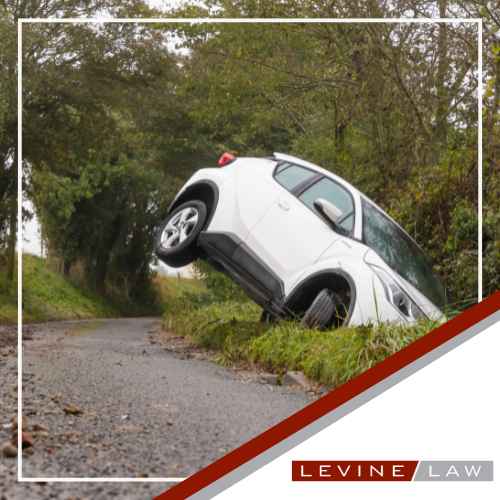
Most crashes in Denver happen because of driver mistakes. These include things like not paying attention, driving too fast, or driving after drinking. Busy roads like I-25 and the “Mousetrap” interchange make these problems even worse, especially when the weather is bad.
- Distracted driving — Using a phone while driving is a major cause of crashes on busy streets like Colorado Boulevard and Federal Boulevard.
- Speeding and aggressive driving — Driving too fast makes roads like Federal Boulevard and Alameda Avenue very dangerous. To help, Denver started a “SPEED” program in 2024 to catch fast drivers.
- Impaired driving — Driving after drinking or using drugs is still a big problem. The Colorado Department of Transportation reported that 684 people died in traffic accidents in 2024 (see in IIHS state fatality data).
- Weather — Quick snowstorms and ice on the road make highways like I-70 and C-470 very slippery and hard to see on.
Congestion plays a role too: Denver’s High Injury Network — about 5% of the city’s streets — accounts for a disproportionate share of its fatal and serious-injury crashes, according to Denver Vision Zero.
What types of injuries are common in Denver car accidents?
Injuries from a car crash can range from minor neck pain to very serious damage to your brain or spine. How badly you are hurt usually decides how long your medical care lasts and how much money your case is worth.
- Whiplash and neck injuries happen often when you are hit from behind.
- Broken bones in the arms, ribs, or collarbone are common in hard crashes.
- Brain injuries (TBI) can range from a simple concussion to permanent memory or thinking problems.
- Spinal cord injuries are very serious and can cause you to lose the ability to move your body.
- Internal bleeding and organ damage might not hurt right away. These need fast care at a trauma center like Denver Health.
Since some pain doesn’t start for a few days, seeing a doctor right away is the best way to protect your health and your legal claim.
Who is liable for a car accident in Denver?
In most cases, it is the person who fails to drive safely. This might mean they were speeding, looking at their phone, or breaking traffic laws. Depending on the accident, more than one person or company might be to blame.
- Other drivers — Usually, the driver whose negligence caused the crash is responsible.
- Companies — If a delivery driver or a truck driver causes a crash while they are working, the company they work for is also responsible.
- Product manufacturers — If a part of the car was broken or didn’t work right (like brakes or tires), the maker of that part might be to blame.
- The government — Sometimes the city or state is responsible if the road was designed poorly or if a city bus was involved. For these cases, you must send a written notice within 182 days under C.R.S. § 24-10-109.
Colorado uses a rule about sharing fault or the modified comparative negligence. If you are 49% or less at fault, you can still get money, but the amount will be lowered based on your share of the blame. However, if you are 50% or more at fault, you get nothing. Insurance companies often try to blame you for the crash so they don’t have to pay as much.


Attorney insight: what makes Denver car accident cases complex?
Denver car accident cases can be complicated. They often involve heavy traffic, arguments over who was at fault, and multiple insurance companies. If a commercial or government vehicle is involved, the case becomes even harder due to rules about employer responsibility and strict deadlines. Even small issues—like an incomplete police report or a delay in medical treatment—can be used to lower the value of your claim. This is why collecting evidence early is vital.
Legal complexity in Denver car accident claims:
- Multiple drivers or vehicles may share the blame for a crash.
- Sorting through multiple insurance policies can make getting paid difficult.
- Your medical records must clearly match the injuries you are claiming.
- Claims involving government vehicles have a strict 182-day deadline for filing.
- It is crucial to save vehicle data and your official crash report as soon as possible.
Being ready for court means saving all physical and digital evidence, working with medical and accident experts, and documenting how the crash affects your long-term health. We prepare every case as if it might go to trial.
What damages can you recover after a Denver car accident?
Colorado injury victims can recover two kinds of damages– economic damages (measurable financial losses) and non-economic damages (human losses like pain and suffering). Non-economic damages are limited by statute C.R.S. § 13-21-102.5 meanwhile, economic damages have no cap.
Economic damages typically include:
- Current and future medical expenses, from the ER to rehabilitation.
- Lost income and reduced future earning capacity.
- Property damage and other out-of-pocket costs (rental car, home or vehicle modifications).
Non-economic damages include:
- Emotional distress, for the anxiety, fear, and psychological trauma caused by your crash.
- Pain and suffering, for your physical discomfort and pain due to your injuries.
- Scarring and disfigurement, for your permanent marks resulting from injuries or surgeries.
- Loss of companionship, for the negative impact on your relationships with family.
- Loss of enjoyment of life, for the inability to participate in hobbies or daily routines you enjoyed before the accident.
While non-economic damages are personal, they often create real bills. Therapy for trauma and medicine for pain cost money. Also, permanent scarring can make it hard to work again.
In Colorado, you can seek economic damages for these costs, plus non-economic damages for the human toll of the crash.
Legal note on Colorado’s damage caps
For cases filed on or after January 1, 2025, Colorado raised its cap on non-economic damages to $1.5 million under HB 24-1472 — a significant increase from the prior limit. Economic damages such as medical bills and lost wages remain uncapped, and in cases of extreme or reckless conduct, exemplary (punitive) damages may be available under C.R.S. § 13-21-102.
Careful documentation is what separates a fully valued claim from an undervalued one.
How long do you have to file a car accident claim in Colorado?
You generally have three years from the date of the crash to file a car accident lawsuit in Colorado under C.R.S. § 13-80-101. This is longer than the two-year limit for most other injury claims in other states, but not unlimited.
If the collision caused a death, a wrongful death action generally must be filed within two years. Deadlines can shift in narrow situations (injured minors, a driver who fled the scene), so confirming your specific deadline early is essential.
Pitfall alert: don’t let a “government vehicle” deadline expire
If your crash involved an RTD bus, a City of Denver vehicle, or a hazardous road maintained by CDOT, a much shorter clock applies. Under the Colorado Governmental Immunity Act, you must serve a written notice of claim within 182 days of discovering the injury — miss it, and the claim is barred entirely, regardless of the three-year lawsuit deadline.
What are the consequences of not reporting a car accident in Colorado?
Failing to report a crash or leaving the scene is a crime that can lead to fines, jail time, or license suspension under C.R.S. § 42-4-1601. Colorado law requires you to stop, exchange information, and notify police after any crash involving injury, death, or property damage. If police do not come to the scene, you must file a report yourself through the Colorado DMV.
Without an official record, you risk your license, and insurance companies are more likely to deny your claim.
Why do you need a car accident lawyer in Denver?
Insurance companies focus on their bottom line and often try to pay as little as possible. Adjusters may pressure you to settle quickly before you know the full extent of your injuries. A lawyer levels the playing field by:
- Protecting your interests: They counter efforts to downplay your injuries or shift blame to you.
- Handling complexity: They navigate multi-vehicle accidents and commercial insurance issues.
- Building a strong case: They secure police reports, witness statements, and vehicle data to prove liability and secure fair compensation.
Opponent playbook
In multi-car crashes on I-25 or at busy intersections like South Santa Fe Drive and West Alameda Avenue, insurers often argue you were partly to blame. They may claim you changed lanes suddenly, followed too closely, or reacted slowly. Under Colorado’s 50% bar rule, even a small share of fault cuts your recovery. So this is where the fight usually happens.
A lawyer fights back by securing the DR 3447 report, scene photos, vehicle “black box” data, and witness accounts before that evidence is lost.
What does the car accident claim process look like?
Most car accident claims follow the same steps: consultation, investigation, demand, and negotiation. If the insurance company is not fair, we file a lawsuit in the Denver District Court.
- Free consultation and case evaluation: We review the accident, your injuries, and your coverage.
- Investigation and evidence: We collect your crash report, medical records, photos, witness statements, and vehicle data.
- Demand and negotiation: We send a formal demand for payment and negotiate with the insurance company.
- Settlement or lawsuit: If we cannot agree on a fair amount, we will file a lawsuit in the Denver District Court and prepare for trial.
The time this takes depends on how badly you were hurt and the court’s schedule.
How do you choose the right Denver car accident lawyer?
Look for demonstrated experience with cases like yours, familiarity with Denver courts and insurers, clear communication, and genuine trial readiness — not marketing slogans.
- Does the firm have experience with cases like yours?
Ask whether the firm regularly handles collisions of your type and severity.
For over 20 years, Levine Law has helped injured people in the Denver area. We handle car, truck, and motorcycle accidents, as well as serious injury and wrongful death cases. We have a strong history of success, including a $1.3 million settlement for a driver hit by someone who ran a red light and a $256,000 award for a rear-end crash. Please note that past results do not guarantee future outcomes. Our proven track record with cases like yours is what matters most.
- Do they understand Denver-specific challenges?
An attorney who knows the Second Judicial District‘s procedures and how Front Range insurers operate brings a real advantage.
Levine Law is in the Cherry Creek area of Denver. Our founding partner, Jordan S. Levine helped make a key legal decision in Colorado that forces insurance companies to act fairly when handling injury claims (Crowell v. ICAO). This same rule is used to protect you in most car accident cases.
- Are they trial-ready?
The strongest settlements often come when the insurer knows your lawyer is prepared to go to trial.
Levine Law’s attorneys hold an AV Preeminent rating — Martindale-Hubbell’s highest peer rating for a lawyer’s legal ability and ethical standards. They also have been recognized by Super Lawyers and the National Trial Lawyers. The firm prepares each claim as if it may go before a Denver jury.
Overall, seek out an attorney with established trial readiness and a history of successful results in the Front Range, rather than selecting a firm based on marketing slogans or flashy advertising.
Client testimonials
Levine Law’s clients regularly describe steady communication and attentive representation after a serious crash.
“Had nothing but the utmost respect for Jordan and his whole team. They treated me like family and I always felt they had my best interest at heart.” — Christina
You can read verified reviews on our Levine Law Reviews page.
Disclaimer: Client reviews are individual experiences and are not a guarantee of any particular result.
Case results that reflect real experience
Levine Law has represented Denver-area clients in serious and catastrophic motor vehicle cases, focusing on securing resources for medical care, lost income, and long-term recovery.
- $1.3 million settlement — a driver ran a red light and struck the client, breaking his leg.
- $770,000 verdict — a truck accident that caused neck, back, and abdominal injuries.
- $256,000 verdict — a rear-end collision in which the client’s neck injury affected his vision.
More outcomes are listed on our Cases & Verdicts page.
Disclaimer: Prior results do not guarantee a similar outcome; every case is decided on its own facts.
Areas served
Levine Law represents car accident victims throughout the Denver metro and Front Range, including:
We also handle related motor vehicle cases, including truck, motorcycle, and rideshare accidents.
Local resources
Hospitals & Emergency Care in Denver
- Denver Health Medical Center — the only Level I trauma center in the City of Denver; 777 Bannock St, Denver, CO 80204
- Saint Joseph Hospital — 1375 E 19th Ave, Denver, CO 80218
- HCA HealthONE Rose Medical Center — 4567 E 9th Ave, Denver, CO 80220
- HCA HealthONE Presbyterian/St. Luke’s Medical Center — 1719 E 19th Ave, Denver, CO 80218
Crash reports & agencies
- Denver Police Department Records — accident reports; records line 720-913-6029
- Colorado DMV — Report a Crash
- Colorado Department of Transportation
Courts
- Denver District Court (Second Judicial District) — City and County Building, 1437 Bannock St, Denver, CO 80202
Disclaimer: We provide these resources for convenience only; we do not endorse or profit from them.
Frequently asked questions
How long do I have to file a car accident claim in Colorado?
You generally have 3 years from the date of the crash under C.R.S. § 13-80-101. Claims against a public entity like RTD or the City of Denver require a written notice of claim within 182 days, so deadlines can be much shorter than you expect.
What if I was partly at fault for the Denver crash?
You can still recover if you are 49% or less at fault under Colorado’s modified comparative negligence rule under C.R.S. § 13-21-111. Your award is reduced by your fault percentage. At 50% or more, you recover nothing — which is why insurers fight over fault.
How do I get my Denver car accident report?
Denver Police and Colorado State Patrol file a Colorado Traffic Crash Report (DR 3447) with the Department of Revenue. You can request a copy from the DPD Records Unit (720-913-6029) or the Colorado DMV crash-records portal. Reports usually take several days to become available after the crash is closed.
Do I have to give the other driver’s insurer a recorded statement?
No. You must report the crash to your own insurer, but you are not required to give the at-fault driver’s insurer a recorded statement. Early statements are often used to dispute fault, so it is reasonable to share only basic facts until you consult an attorney.
How much does a Denver car accident lawyer cost?
At Levine Law, you don’t pay anything upfront to hire us. Our fee is simply a portion of the money we win for you. We only get paid if we win your case—that is our “No Win, No Fee” promise.
Contact a Denver car accident lawyer today
If you or a family member was injured in a Denver-area crash, Levine Law is available 24/7 to review your claim and explain your options at no cost.
Call 303-333-8000 or contact us online for a free, no-obligation consultation.
Attorney Review & Office Information
This page has been prepared for review by Colorado-licensed attorneys at Levine Law to reflect current Colorado law. Legal services are provided by attorneys licensed in the State of Colorado.
Levine Law — Denver Office
4500 Cherry Creek S Dr #400,
Denver, CO 80246
Phone: 303-333-8000 — free consultation, available 24/7
Other Cases We Take On
Beyond car accidents, Levine Law helps injured Coloradans across a range of practice areas:
- Truck Accidents
- Motorcycle Accidents
- Uber & Lyft / Rideshare Accidents
- Pedestrian Accidents
- Bicycle Accidents
- Slip & Fall Accidents
- Premises Liability
- Traumatic Brain Injuries
- Spinal Cord Injuries
- Wrongful Death
- Nursing Home Abuse
- Catastrophic Injury
This content is for informational purposes only and does not constitute legal advice. Reading it does not create an attorney-client relationship. Past results do not guarantee future outcomes; every case is evaluated on its own facts. This content has been prepared for review by Colorado-licensed attorneys at Levine Law.


